Currently, 3D geometries are still being derived into a 2D drawing format so that suppliers can be given clear manufacturing orders and workers, e.g., at the press brake, receive unambiguous production instructions. However, the sheet metal structure has been defined and spatially determined at all interfaces with the connecting components.
In addition to the sheet metal elements of the self-supporting monocoque construction, the cast connections of the rear suspension integrated into the frame were also finalized in terms of calculation and designed for production. To accommodate potentially larger batch sizes later on, both sand casting and the more cost-effective permanent mold casting process for larger series were taken into account for the demolding direction of the cast parts. This did not incur additional costs now, but will save costs and time in future development.
In the first driving test prototype, the BIW (Body in white) sheets were not yet bonded for simplicity and were only screwed together. The frame currently being built will be bonded and riveted, as it will be in subsequent series production. The frame’s crucial connection is achieved through the adhesive, which has become established in automotive manufacturing. While rivets contribute to stiffness, their primary function is to precisely hold components in place during the adhesive’s curing phase.
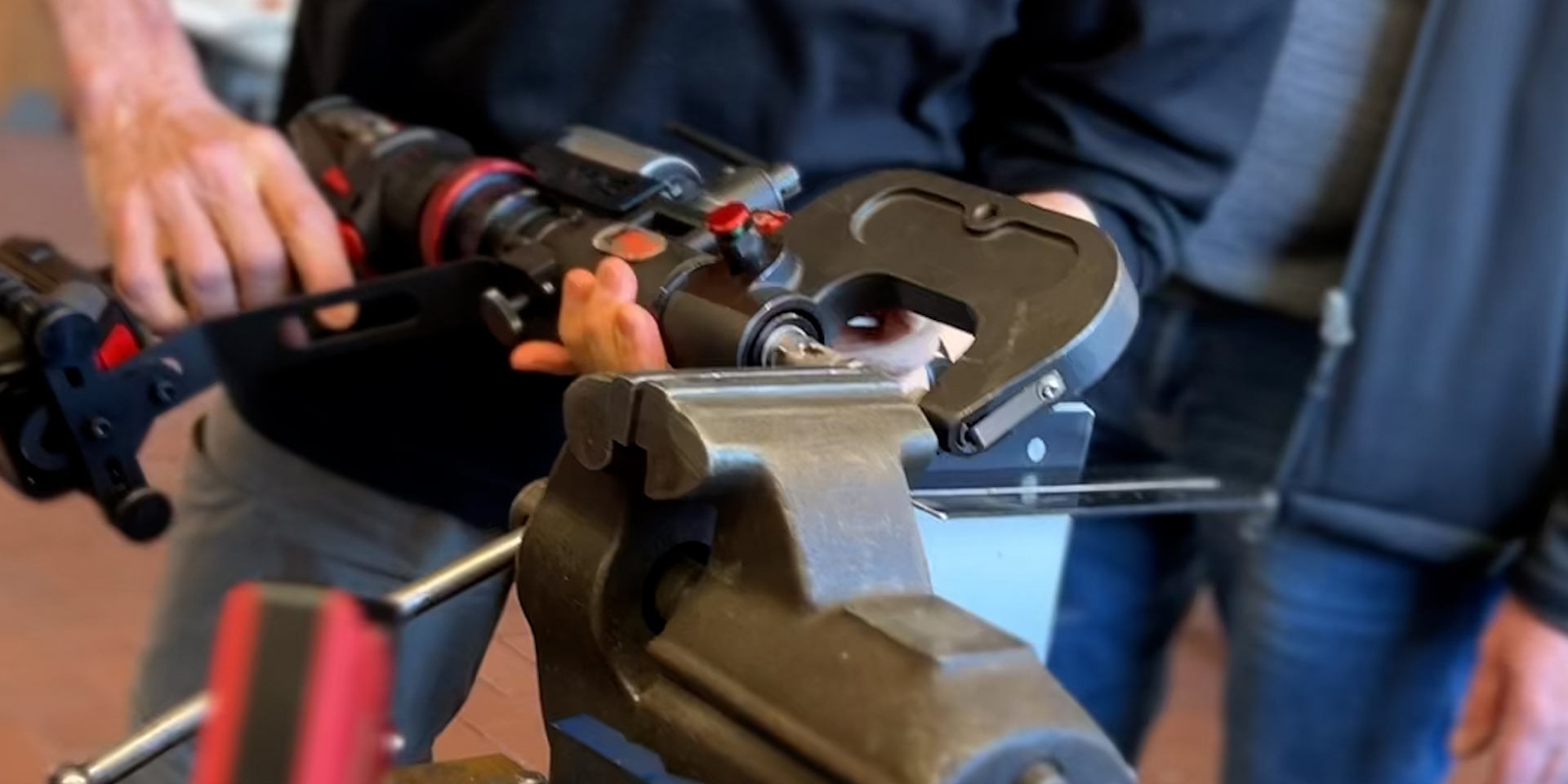
Hollow punch rivets will be used in uncovered and visually conspicuous areas, which enable the load-bearing sheets to be joined almost flush. High-quality punching tools are available for professional workshop use for repairs and small-batch production and have been tested in recent weeks. Handling is simple and clean, and the quality is convincing.
Over the next few days, suppliers will receive the production orders for the sheet metal and cast parts. For aesthetic reasons alone, the visible surfaces will receive a darkening and corrosion-protective coating. However, the bonding surfaces also require a certain surface quality, which is why we opted for matte black anodizing as a protective measure, which also meets the durability requirements of the TWIKE 5.
You can find more about the assembly of the BIW and the development of the adjacent assemblies in the following articles.