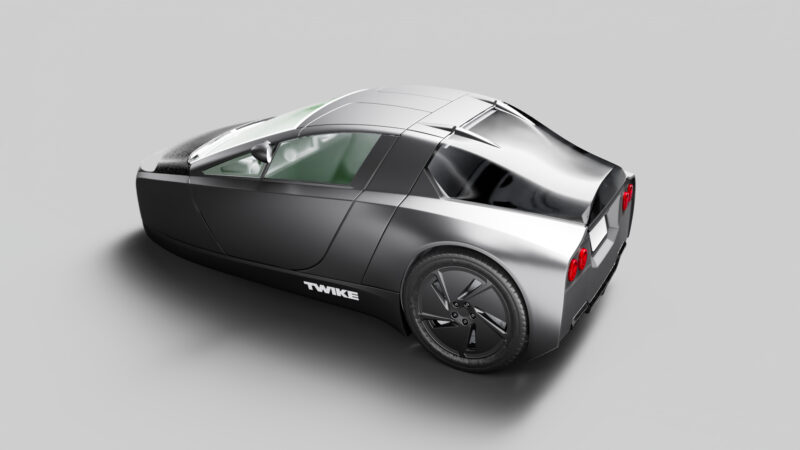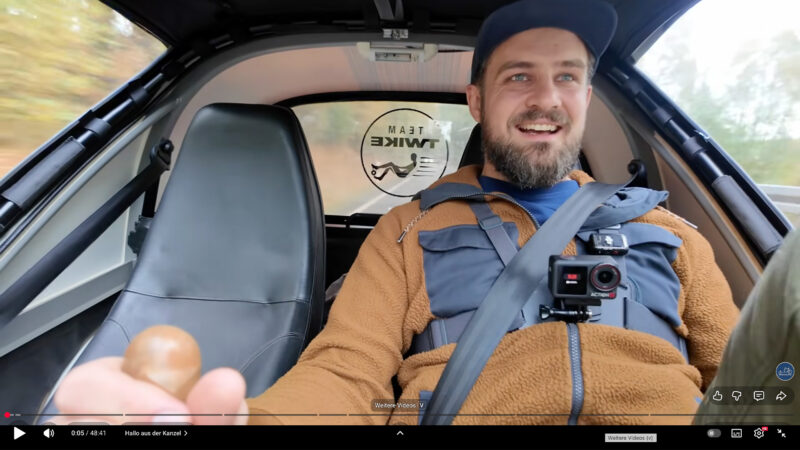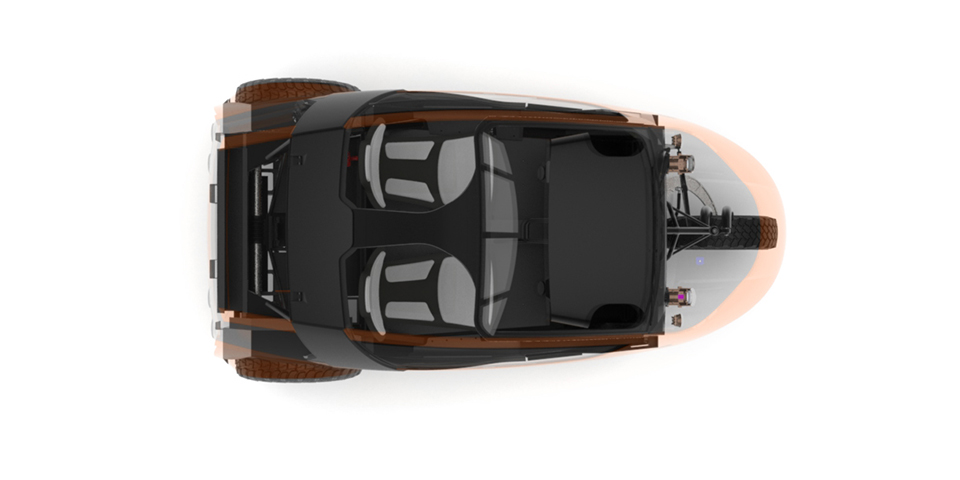
FINE Mobile GmbH from Rosenthal is different. Very different from other companies involved in electromobility. And above all, the manufacturer can no longer be described as a “start-up”. The product: TWIKE. And that’s a bit more special and not (yet) part of the mainstream . In “technician speak”, this is a vehicle in EC vehicle category L5e: “Three-wheeled motor vehicle with three symmetrically arranged wheels with an engine capacity of more than 50 cm³ with internal combustion engines and/or a maximum design speed of more than 45 km/h”
Since 1986 – thinking differently
In fact, the UR-TWIKE was developed by students at ETH Zurich in 1986. A two-seater bicycle (actually a tricycle!) with a body. It weighs 50 kg and can reach speeds of up to 50 km/h with a pedal drive. It won a prize at the World Expo in Vancouver in the same year.
This was followed in 1991 by the TWIKE 2, which had an electric auxiliary drive for the first time. It remained a prototype, which was developed into the TWIKE 3 in 1995. The first 190 units were delivered.
It was not until 1998 that Fine Mobile GmbH was founded as the German general importer. After some turbulence on the stock exchange, TWIKE became a German company in 2002, taking over the entire production from Switzerland.
In 2005, the TWIKE then achieved a range of over 100 km for the first time thanks to newly developed batteries, and in 2007 the milestone was reached with LION batteries, which doubled the range. TWIKE riding suddenly became very uncomplicated.
Further successes in various competitions followed: victory in the World Solar Challenge in Australia in 2007, a 3rd place for the TWIKE 4 in the Automotive X-Prize, and, and, and.
We beam into the present.
2019 will be another milestone for the company, as the TWIKE 5, which has been in development since 2016, will be unveiled at the 2019 Geneva Motor Show. At the heart of the new model is a new drive and innovative steering concept. And, more importantly, the TWIKE 5 will not remain a prototype, but will go into series production.
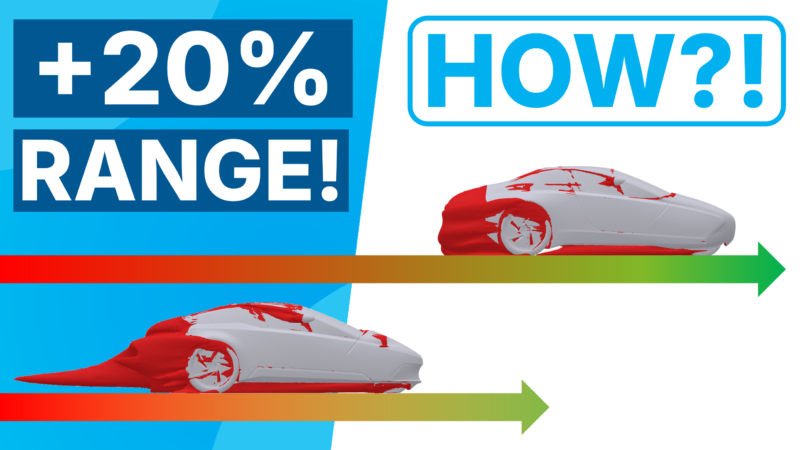
The TWIKE 5 is also a lightweight, highly efficient, three-wheeled vehicle that is incredibly energy efficient to operate. The upper weight limit will be 499 kg, not low for an electric vehicle that is actually powered by pedals and only has battery support. However, the additional consumption is almost completely offset by higher electrical efficiency and lower air resistance.
The TWIKE does not have a steering wheel, but two sidesticks on the left and right, just like the TWIKE 4.
The performance data is convincing
The vehicle will be available with batteries of different sizes. The smallest battery with 10.5 kWh will enable a top speed of 120 km/h with a range of more than 150 km. The largest battery with 31.5 kWh will be capable of over 190 km/h with a range of more than 500 km. Consumption should be between 6 and 13 kWh/100 km, depending of course on driving style and environmental conditions.
The payload of up to 270 kg (depending on type) also allows for a little more luggage, assuming that each of the two passengers weighs around 80 kg.
Sounds too good to be true – especially for a pedal-assisted vehicle that was developed strictly speaking from a converted bicycle.
And the pedal assistance is still built in. This is referred to as a “human power hybrid”. The muscle power gained charges the battery and thus increases the range. What more could you want? Ecological driving that also benefits your health. “The pedal generator allows you to get your daily dose of fitness training on the side, so to speak.” you can read on the website.
Financing through community funding
The TWIKE 5 will not be financed by the usual large investors, but by community funding. The company also calls this “swarm financing”. Not to be confused with crowdfunding. Community funding is effectively a loan with an attractive interest rate. You could say it is an interest-bearing down payment on a TWIKE 5. At the moment, the company has just over 1 million euros, and production will start when the 2 million mark is exceeded. With 418 pre-orders already, the initial production target of 200 units has already been far exceeded.
We think: a great concept, a great vehicle, an incredibly interesting approach. We are keeping our fingers crossed.
Quelle: e-engine.de