How green is the TWIKE?
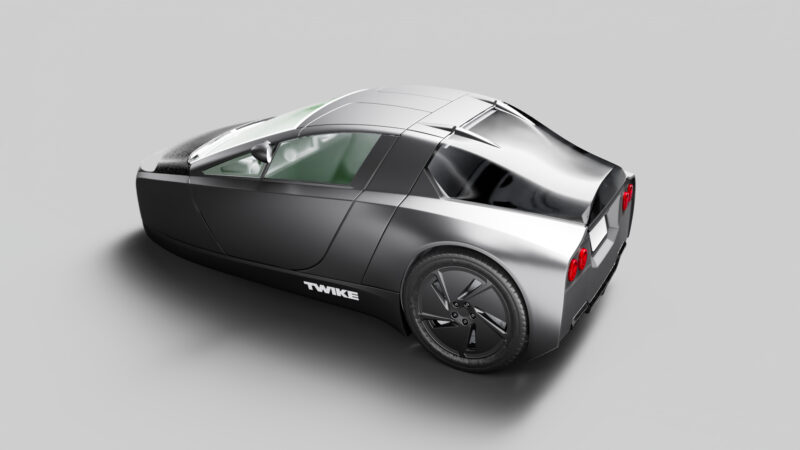
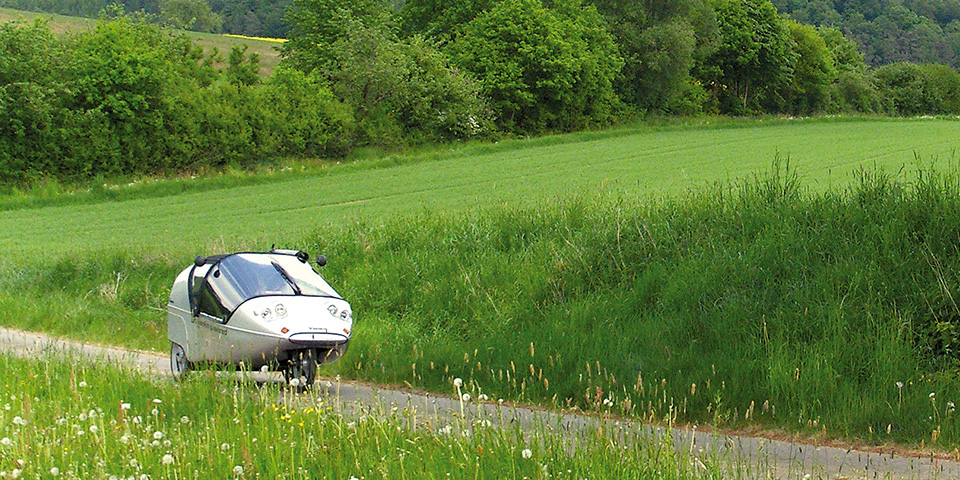
No other comparable means of transport is as resource-friendly as the TWIKE: the low energy consumption of around 0.5 l/100 km is unrivaled. The TWIKE produces neither exhaust fumes nor noise pollution and, apart from tire wear, no particulate matter. The TWIKE consumes four to seven kilowatt hours of energy per 100 km. Based on the CO2 emission factor of the current German electricity mix of 0.6 kg/kWh, the TWIKE produces only 24 to 28 g/km. If the traction current for the TWIKE is generated from renewable energy sources, the CO2 emissions are between 2 and 5 g/km (comparison Toyota Prius: 104 g/km. Source: ifeu Institute Heidelberg, Greenpeace Energy). If the electricity required is generated directly from wind or solar energy, neither exhaust gases nor particulate matter are produced during electricity generation.
Where do the TWIKE batteries come from?
The battery cells are high-quality standard industrial cells and are manufactured in Asia.
How does the recycling of the TWIKE and the batteries work?
Most of the TWIKE’s components are fully recyclable. The LION batteries have a long service life, which is far longer than the manufacturer’s warranty. The first series of LION batteries have still been in use for over 12 years, so it is not yet possible to make a definitive statement about their service life. When the battery has reached the end of its service life, we send it to a metallurgical recycling process in which cobalt, nickel and copper in particular are recovered.
How much CO2/energy is needed to build the TWIKE?
Unfortunately, we cannot give the exact CO2 footprint or energy requirement, as the data calculations behind this are very complex and a great deal of knowledge is only available from the upstream suppliers. Compared to other electric vehicles, however, the TWIKE differs in its much lower weight of only approx. 500 kg, which can at least be a simple comparative indicator (half the weight = half as much material input = half as much energy input).
When will it be possible to offer more environmentally friendly batteries?
We are aware of the impact of the use of critical raw materials for our vehicles. Not only the mining of lithium or cobalt, which must of course be extracted in the most environmentally friendly way possible, but also the extraction of aluminum or petroleum-based plastics. Our current contribution is to avoid critical materials as far as possible, or to use them as little as possible with intelligent lightweight construction. However, it is currently not possible for us to completely dispense with or switch to technologies that are not yet available to us. However, we will continue to analyze the issue on our own initiative and substitute the use of materials as soon as possible.