Why do we need a mobility turnaround?
At around 20 percent, transportation is a major contributor to Germany’s CO₂ emissions. We must become climate-neutral by 2035 at the latest in order to achieve the agreed 1.5°C target of the Paris Climate Agreement.
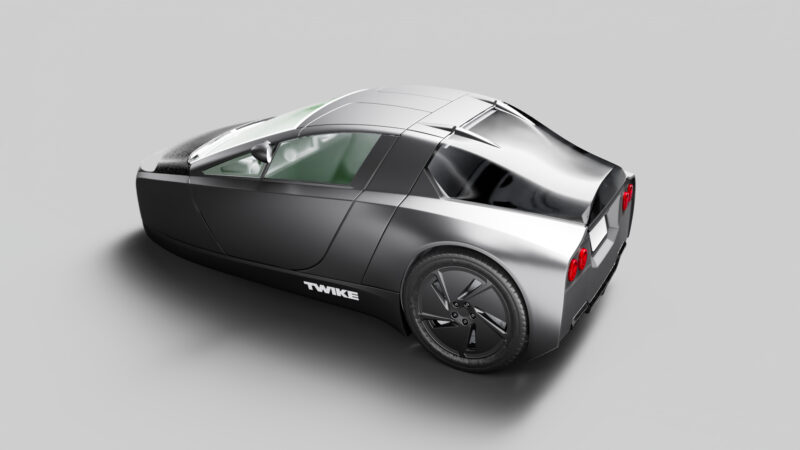
Swiss students at ETH Zurich were already thinking about the mobility of the future in the 1980s when they invented the TWIKE. 35 years later, the problems considered at the time are more important than ever.
CO₂ – neutral Mobilität
The main aim of the mobility transition is to switch transport to sustainable energy sources and thus significantly reduce carbon dioxide emissions.
TWIKE 3 pilots are already contributing to the solution with their reduced energy consumption. And it will also be possible to operate the TWIKE 5 with just 7 kWh/100 km. Using the energy generated by a 10 square meter solar system, a TWIKE 5 will be able to cover an annual mileage of over 20,000 km.
Solar mobility is possible today. However, with the integrated bi-directional charging system, energy can also be drawn from the vehicle when needed. This transforms a vehicle from a pure consumer into a prosumer, enabling it to store energy reserves for the grid.
The vehicle is thus transformed from a potential problem of the energy transition into a decisive part of the solution (because it can store energy and release it as balancing energy).
Light electric vehicles (LEV )
In addition to the aforementioned efficiency and their contribution to climate-neutral mobility, light electric vehicles offer further advantages.
You need less parking space.
With their lower weight, they cause less damage to the road.
With their lower consumption, they place less strain on the electricity grid.
Parallel to the TWIKE 5 , the Microlino light vehicle will be launched on the market, and we look forward to every additional LEV and keep our fingers crossed for all of us. Every LEV takes us all a step further.
Further mobility solutions
In addition to the renaissance of night trains, there are increasing examples of a further mobility trend.
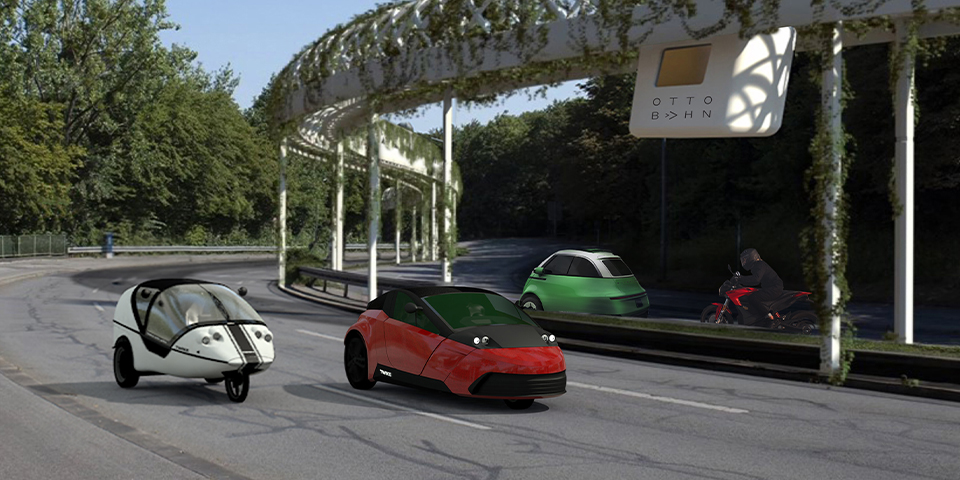
Our cover picture shows the German Ottobahn, and Elon Musk’s Hyperloop also inspired us some time ago.
But the considerations go one level higher.
While Swiss students at ETH Zurich are taking off in an electric airplane (Esling project), Solar-Impuls also set the milestone for solar airplanes over a decade ago.
Down to earth, commercial vehicles will also become increasingly visible in everyday life. The activities of Designwerk AG in Winterthur, Switzerland, are notorious for this. And a Munich start-up is also developing a marketable smaller commercial vehicle, the a-Car.
The list is not complete and that gives us hope.