Hazardous waste, says my neighbor. “It’s all hazardous waste in these huge batteries. Where are we supposed to put this stuff later? That’s madness!” My neighbor works for a large medical technology company and has proudly maintained and driven a Porsche Boxster for several years. For him, electric cars are just a crazy idea from anti-environmentalists.
At the same time, the website of German-speaking Tesla fans is singing the praises of the electric car. tff-forum.de went online back in 2011. The Tesla Model 3 has actually been delivered since February 2019. “I drove an electric car for the first time today,” writes one of the buyers. “The (non-existent) background noise and the acceleration are pure madness. I say that even though I come from an A45 AMG! I’m going to sleep happily tonight.”
A look back at the Geneva Motor Show at the beginning of March 2019: as in previous years, petrol, diesel and electric cars are exhibited side by side in the glittering world. But something is different. Electric cars are no longer concept cars with fantasy bodywork, fictitious acceleration figures and fabulous ranges. They are real, you can sit in them and they will all be in dealerships by the end of 2019: Audi e-tron 55 quattro, Mercedes EQC, Peugeot e-208, Nissan Leaf and, a little later, the Volvo offshoot Polestar2. And something else is striking: The juice for electric cars is also there. The manufacturers of high-performance charging stations present themselves at expensive trade fair stands. None of them were to be seen at the Salon 2018. Even the TCS is there, presenting a special yellow breakdown service trailer that can be used to recharge broken-down electric cars with emergency power.
A look at the enrollment figures for new cars in March 2019 confirms the finding that something is shifting quite quickly: Tesla sold 1243 cars in Switzerland in this one month, almost as many as in the whole of 2018.
Nevertheless, the proportion of electric cars is small. In March 2019, more than 27,000 petrol and diesel cars were sold and redeemed in Switzerland.
The manufacturer of the Tesla Model 3 promises a range of 500 kilometers, a top speed of 233 km/h and acceleration like a Ferrari. If you want, you can have the car drive autonomously on highways and country roads; the car requires the driver to have one hand resting loosely on the steering wheel. While the car monitors the traffic with six cameras and keeps in lane, you can relax and enjoy your choice of music: your favorite songs are streamed online via Spotify, anywhere in Europe. There is also an eight-year warranty on batteries and up to 192,000 kilometers on electric motors. And all this from 48,200 francs, less than the price of a BMW 3 Series with a petrol engine.
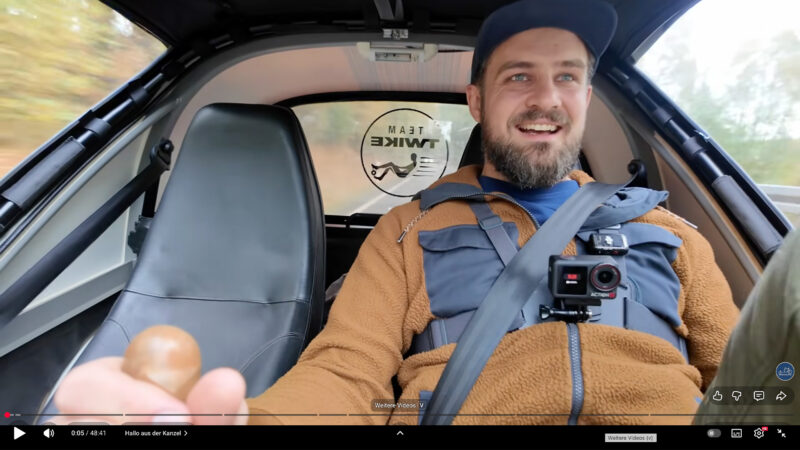
Just ten years ago, this seemed unimaginably far away. In 2009, a number of manufacturers announced electric cars for the future at the motor shows in Geneva and Frankfurt, but in reality there were only handmade, expensive one-offs. I asked my editor-in-chief at “Automobil-Revue” what it would feel like to cross the Alps on battery power. We planned a test drive over the Gotthard in a rented TWIKE.
With the TWIKE over the Gotthard
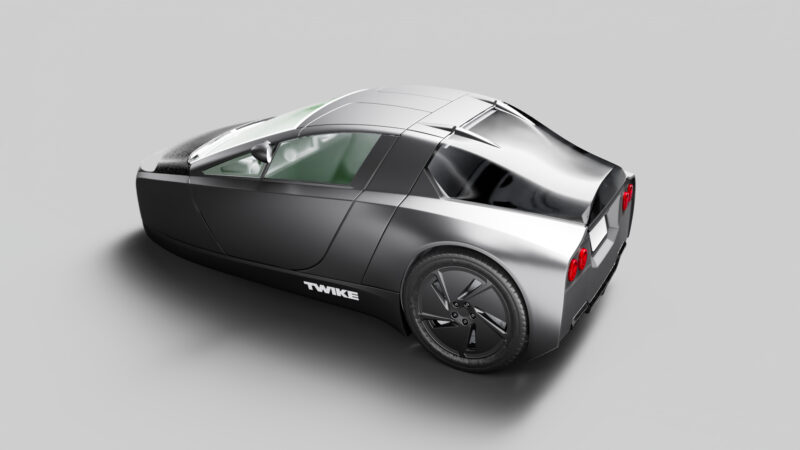
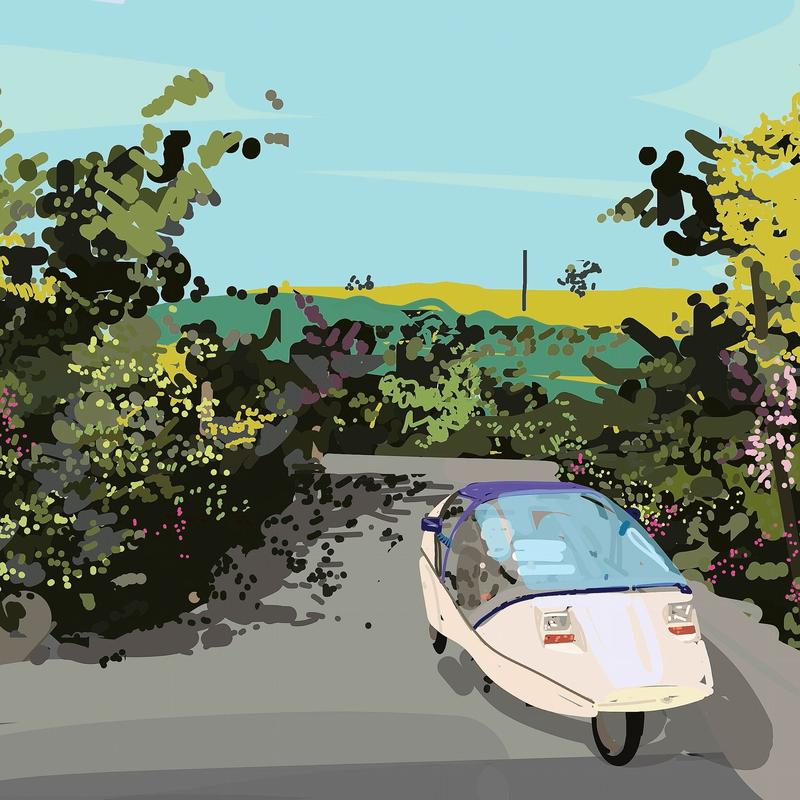
The TWIKE was designed in the mid-1980s by students at ETH Zurich as a bicycle with a full fairing and won a prize at the 1986 World Expo in Vancouver. The vehicle was registered for road use in 1996. To make life easier for the TWIKE rider pedaling, better and better batteries were installed over the years: first nickel-cadmium batteries, then nickel-metal hydride. The breakthrough came in 2008 with the use of lithium-ion batteries, which had no loss of capacity and a longer life expectancy. The eco-pedal bike had become a means of transportation suitable for the Alps, usable even for untrained, comfortable people like me.
The TWIKE for my Gotthard test drive was built in 2002 and retrofitted with the latest drive technology in 2008: Lithium-ion batteries with 5.5 kWh capacity – that’s a seventh of what a small car like the Renault Zoe carries. The top speed of 85 km/h was sufficient for Swiss country roads, and the range of 100 kilometers had to be tested. As a new vehicle, the TWIKE would have cost 44,000 Swiss francs at the time – a luxury item for electricity enthusiasts.
The test ride began on September 21, 2009 at 11:00 a.m. in Zurich and was to end a few hours later in Bellinzona. The TWIKE didn’t have a range indicator, but the rental company told me to keep an eye on the battery voltage instead. 400 V meant full to the brim, 330 V was the emergency reserve, 300 V meant: recharge immediately, otherwise the expensive battery would be damaged. I set off from Zurich with 400 V and recharged for 15 minutes in Ibach SZ at the socket in the storeroom of a Migrol filling station and in Altdorf at the charging station of the electricity supplier EWA. Nobody was prepared for electric travelers back then, there was only 220 V mains electricity at household sockets.
I attacked the Gotthard north ramp with 390 V and was stranded in Andermatt with 335 V. After 35 minutes of charging, the power lasted as far as the Gotthard Hospice; the TWIKE bravely purred up the mountain at 45 km/h. But the descent down the Tremola was not enough. But the descent over the Tremola was not enough to recharge the battery. So another 15 minutes of refueling in Biasca, then an economical crawl at 50 km/h to Bellinzona. At the entrance to the town, however, the battery indicator warned: only 316 V left. So I recharged again – at an ATM. I found out on this trip that there were 220 V sockets available day and night at ATMs. I fell into my hotel bed at 10 pm, after eleven hours of traveling.
Despite my overly long journey, 2009 marked the turning point for cars that run on electricity: In June, series production of the Mitsubishi iMiEV started in Japan, in August Nissan presented the production version of the Nissan Leaf – both were launched on the European market in December 2010. They were the first electric cars suitable for everyday use, equipped with airbags and prepared for fast charging plugs according to the Japanese Chademo standard. However, there were still no charging stations in Europe.
And something else happened in 2009: the electric car left the niche of the ecomobile and began its journey into the automotive lifestyle segment. A resourceful US entrepreneur by the name of Elon Musk was the first to want to take the reputation of the frugal eco-car away from the electric car. He presented the Tesla Roadster in 2006, which was also delivered in Europe from May 2009. The pretty, open-top sports car based on a Lotus Elise was the world’s first series-produced electric car with a range of over 350 kilometers and a top speed of 201 km/h. Only just under 2,500 were built, most of which remained in the USA. With a price tag of well over 100,000 francs, the Roadster was not intended for everyone. It was the flagship of a company that had bigger plans and wanted to impress investors with the sports car.
The young billionaire Elon Musk, who made his money with the online payment system Paypal, wanted to shake up the car industry, for which the electric car had not been a big issue until then. Musk invested his money in the newly founded company Tesla Motors in 2002. The tiny start-up company was to become the world’s leading mass producer of electric cars. In 2009, however, nobody wanted to believe that.
Has the car industry slowed down?
Only today, ten years later, are electric cars being taken seriously. Why has it taken so long? Because the car industry was standing on the brakes? For a long time, electric cars were actually a highly risky and expensive business for conventional car manufacturers. In the 1990s, General Motors designed the EV1 electric car in response to strict Californian environmental laws and rented out almost 1,000 vehicles to customers in California from 1996 to 1999. When the environmental regulations were relaxed following court cases, GM withdrew the extremely loss-making rental cars and scrapped them. By today’s standards, the EV1 was not a car for the mass market anyway: with its lead batteries, it had a top speed of just under 130 km/h and a range of 120 kilometers. In 2011, BMW ventured into the field of electric cars and presented the prototype of the BMW i3, which came onto the market at the end of 2013. The first generation of the compact city car had sporty handling and good acceleration, but a range of significantly less than 200 kilometers. Sales figures remained low, and the millions invested in expensive lightweight carbon fiber bodywork did not pay off for BMW.
Stefan Bratzel, Director of the Center of Automotive Management in Bergisch Gladbach, has summed up the hurdles that the electric car has to overcome in a crisp formula: “the RIP problem”. It stands for range – infrastructure – price. Until the RIP problem is solved, Bratzel said at the beginning of 2019, “electromobility will rest in peace”.
Two years after conquering the Gotthard with the TWIKE, I got back into an electric car, a Peugeot iOn. It was a chilly day in February 2011 and the Peugeot was a real car with four doors, four seats, six airbags – and even a heater. The drive battery was three times bigger than that of the TWIKE, and the manufacturer claimed a range of 130 kilometers. This time I wanted to go from Burgdorf near Bern to the Geneva Motor Show, 220 km, with a stopover after 130 km at Lac de Joux.
Experience the RIP problem
The wintry drive turned into a disaster: the heating remained off to protect the battery, but after 96 kilometers of leisurely driving it was already empty. We – my photographer and I – charged for 90 long minutes in Estavayer-le-Lac at the outside socket of a Migros store, then another 45 minutes next to the car wash of a petrol station in Yverdon. Finally, 23 kilometers later, we were miserably stranded in the medieval town of Romainmôtier. There were still 15 kilometers and 400 meters of altitude to go before we reached Lac de Joux. As there was no power socket to be found, a cab had to tow the small electric car to its interim destination. The car could be charged overnight at the hotel, and the next day the Peugeot iOn made the 75 km to Geneva in one go. Even the heating was allowed to run – it was minus 10 degrees outside.
The test drive clearly demonstrated the RIP problem: the range was less than the distance to the stopover. The infrastructure was lacking – although the car already had a socket compliant with the Japanese fast-charging standard Chademo, there were still no charging stations, so we had to charge with 220 V household current, which took ages. And the price was high: the small car cost 46,000 francs, around four times more than a comparable gasoline-powered car. We don’t want to do the Peugeot iOn an injustice. The car is still being sold. And between Burgdorf and Geneva, there are no fewer than 12 Chademo fast-charging stations on the roadside. The same journey today would not be a two-day adventure, but completed in three hours.
Anyone who buys a Tesla Model 3 in spring 2019 will hardly notice the RIP problem. There’s no need to worry about range; with a full battery, the display shows a range of 490 kilometers. (On fast highway stretches in Germany, the range drops to around 300 kilometers). The on-board computer calculates the route to the nearest Tesla Supercharger; if it gets tight, it warns the driver to reduce speed slightly in order to reach the navigation destination. A Tesla that has been run down to 10 percent can be half-filled again in a quarter of an hour. And the network of charging stations is now so dense throughout Europe that even older electric cars, a VW e-Golf or BMW i3 from 2014, which only have a real range of 150 kilometers, can be driven without any problems.
That leaves the issue of price. A Tesla Model 3 costs 48,200 francs. However, there are also electric cars with a long range for less money, such as the Hyundai Kona or the Nissan Leaf. The Peugeot iOn, designed for city drivers and short commutes, costs 22,500 francs. But there are also cheaper cars in this segment. For example, the Microlino, a Swiss development that will be manufactured in Germany from summer 2019. The little car looks like a resurrected BMW Isetta – there is only one large access door at the front of the car. Instead, the Microlino is 2.44 m long and can be parked crosswise in a parking lot. It has a top speed of 90 km/h and a range of 200 kilometers. The basic model with a range of 125 kilometers will cost around 13,500 Swiss francs. The battery is included with all of these cars. Only Renault offers optional battery rental for its Zoe, Twizy and Kangoo Z.E. electric models. It is replaced when the capacity has fallen below 75 percent. Purchased Renault batteries, on the other hand, are guaranteed for five years and 100,000 kilometers for a capacity of at least 66 percent.
If you take a look at the automotive landscape in spring 2019, you can see that electric cars have arrived and will visibly change the street scene in the coming years. Experts expect around 40 percent of all newly registered vehicles to be electric cars by 2030. This would have a massive impact on the economy: 40 percent fewer combustion engines means 40 percent fewer automatic gearboxes will have to be produced, 40 percent fewer exhaust silencers, fuel pumps, exhaust gas recirculation valves, starters, alternators, pistons, oil pans and valve cover gaskets.
Car industry on the brink of shrinkage
What will no longer be installed in cars from 2030 will no longer need to be repaired from 2040. A well-established global industry is facing a drastic downsizing, and certainly a fundamental restructuring. Swiss suppliers will also be affected. Those that manufacture transmission and engine parts, but also specialist companies such as Autoneum in Winterthur, which develops heat shields for the engine compartment and exhaust tract and supplies customers worldwide.
According to most experts, the energy supply is a smaller problem than the conversion of industry. In a new brochure, the German Federal Ministry for the Environment points out that the additional electricity demand of electric cars is quite small compared to the already imminent conversion of the electricity grid, which has to be adapted to the feed-in of solar and wind power. If all 45 million cars in Germany were electrified, the electricity demand would only increase by one sixth. Today, twice as much electricity is already being generated from renewable sources, and the trend is rising.
The situation is similar in Switzerland. Electric cars are preferably charged at home or at work. In the morning shortly before 9:00 a.m., all cars are parked in front of the office, in the evening from 6:00 p.m. most are at home. This creates two mountains of daily electricity demand that need to be managed – especially on dark winter evenings when there is no sunshine and no wind turbines turning. Once the electricity is available on the grid, distribution is no longer a problem. The number of fast-charging stations is increasing rapidly this summer – they are being built in highway parking lots, in front of restaurants, hotels and shopping centers and are good business: the operators buy the electricity at the bulk consumer rate and sell it to drivers at the charging stations at a profit of up to 100 percent.
However, the debate is far from over. In April, Hans-Werner Sinn, the former head of the Munich Institute for Economic Research (ifo), claimed in a study that an electric car emits up to 28 percent more CO2 than a diesel. However, the economic researcher had made errors in his calculations. Among other things, he had added the drive battery to the production costs of a diesel car, but had not deducted the engine, gearbox, catalytic converter and particulate filter from the calculation. Only the VW Group, shaken by the diesel scandal, publicly confirmed ifo’s calculation.
The German Ministry of the Environment, on the other hand, concludes that electric cars are already 16 percent better than diesel cars in terms of CO2 emissions, even with the German electricity mix, which has a high proportion of lignite. This lead will double by 2025. This is because the battery charge of an electric car purchased today will become cleaner from year to year as it participates in the energy transition and will be able to fill up with a higher proportion of green electricity in the future. Petrol and diesel cars, on the other hand, are dependent on imported fossil fuels for their entire service life; they cement the current energy mix.
The ideological divide in the debate also runs through neighborhoods – not least my own. My neighbor, who calls batteries from electric cars hazardous waste, is not entirely wrong: a recycling industry that can handle the large quantities of batteries that are soon to be expected does not yet exist. Only when this industry is established will lithium, cobalt, copper, graphite and neodymium – all the valuable materials contained in electric cars – really be as recyclable as they should be.
In my thirty-year career as a car owner, I have owned fifteen petrol and diesel cars. I was skeptical about electromobility. Since the beginning of March, I have been sharing a Tesla Model 3 with a friend and we cover 4,000 kilometers every month. And this summer I’m traveling to the Mediterranean with it.
From Rainer Klose
Source: NZZ Folio