PresseBox, 15.06.2022
The battery power supply is the technical Achilles heel of electromobility. While manufacturers are already clearly superior to the classic combustion engine in terms of motorization, mobile power storage continues to present them with challenges. The relationship between size, weight and storage capacity is of central importance here. As a result, the battery technology currently available is forcing manufacturers to make compromises when it comes to the range of their vehicles.
The developers of the innovative three-wheeled electric vehicle TWIKE were also repeatedly confronted with the question of reconciling limited space, desired weight and electric range by choosing the right energy storage system over the course of its now twenty-year development history. For the sportiest and most powerful Model 5 to date, the developers opted for the widely used 18650 design. The cylindrical cell is used in notebooks and flashlights, for example, but was also used for years by electric car giant Tesla in individual model series. Since the introduction of the TWIKE 3, presented in 2007, the Hessian company has relied on the standard battery.
The news that production of the preferred cell was discontinued by the usual manufacturer last year proved to be correspondingly drastic. At the same time, the market did not offer a compatible successor variant.
“Such an event is of course a worst-case scenario for vehicle development,” recalls Martin Möscheid, Managing Director of TWIKE GmbH. “The search for an adequate alternative caused us a few headaches. After all, we had to reconcile the limited range with basic vehicle features.”
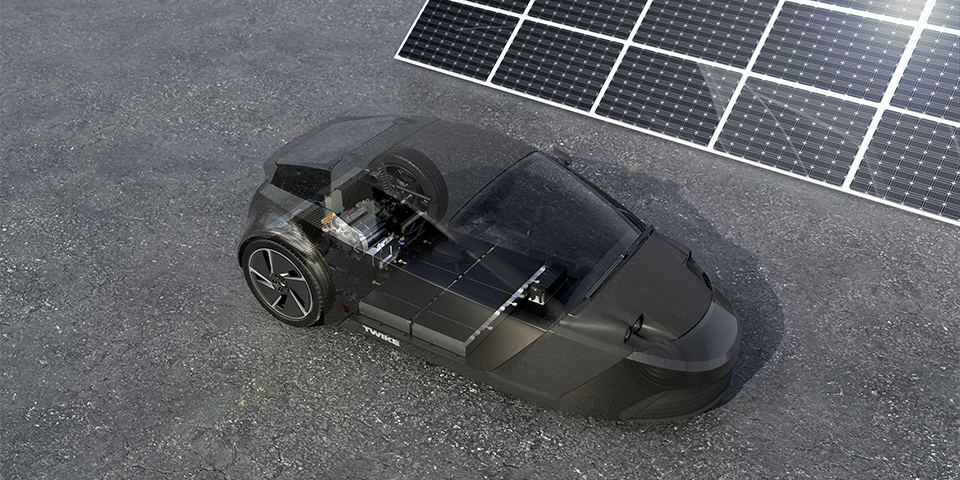
The limited space in the underbody of the TWIKE 5, where the batteries are housed, proved to be a particular challenge. After intensive research, the VDA format finally proved to be suitable. With a height of 108.5 mm, the alternative only required a modification to the sandwich structure of the battery box. Once again, the advantage here was that TWIKE 5 can completely dispense with active cooling thanks to the low stress on the battery and the desired long service life. A panel heater was only integrated into the battery box for vehicle operation at sub-zero temperatures.
As a positive side effect of the necessary adjustments, the rigidity of the main frame was also increased. The battery electronics were also integrated into the sandwich structure, which reduces assembly times and frees up additional storage space behind the seats.
As a result of the switch to the new battery format, the charging capacity can be adjusted to a lesser extent. TWIKE 5 will therefore only be available in two variants: one version with an energy content of around 18 kWh and a range of approx. 250 km and a second model version with double the capacity (36 kWh) and therefore double the range (500 km).
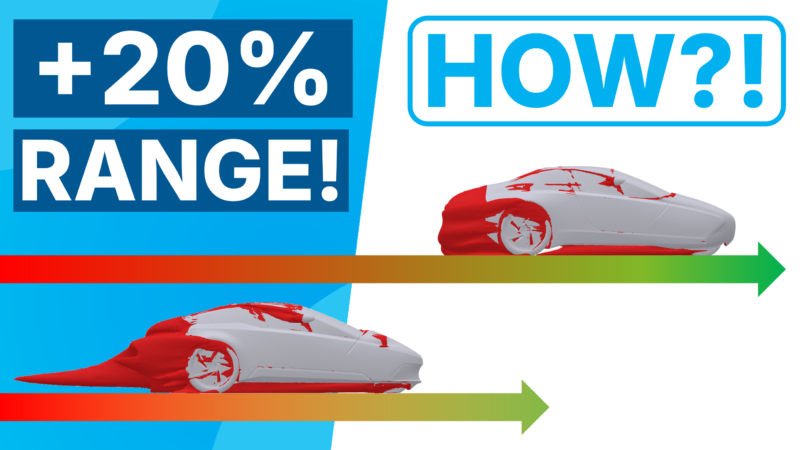
As a relevant compromise, the VDA format is recognizably heavier. Other components also proved to be heavier than originally intended in the course of vehicle development. However, the developers were able to compensate for the negative effects of the additional weight with aerodynamic modifications. Furthermore, the additional battery weight causes a lowering of the vehicle’s center of gravity and thus also improves the driving dynamics of the TWIKE 5.
“Over the years, we have learned to constantly face new challenges,” explains Möscheid. “After all, we are treading new paths with TWIKE, where we are several steps ahead of the automotive industry in many areas and have to react flexibly to short-term changes.”
In the coming months, TWIKE will carry out further tests to enable the selection of a suitable battery manufacturer and to confirm the suitability of the VDA format for series use.