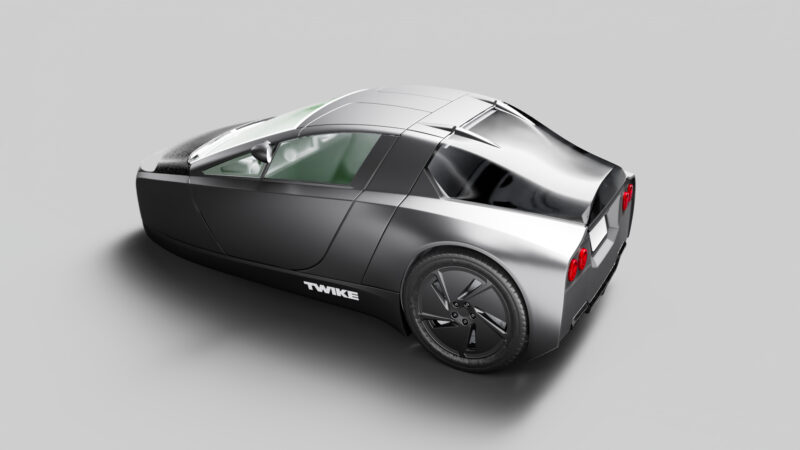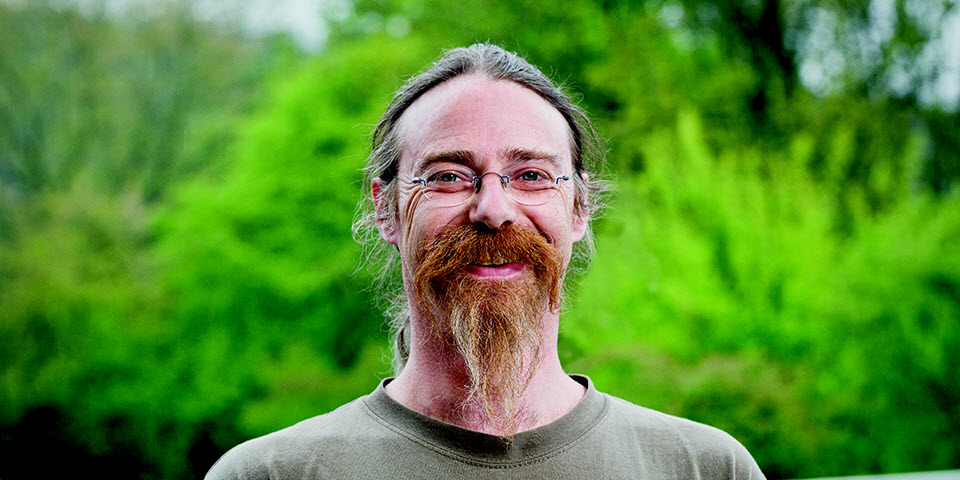
He thinks nothing of smelly engines and certainly nothing of oil wars. And when the Zurich native wants to set a world record , he does it: using discarded scooter batteries and an old three-wheeled electric vehicle – the Twike – the 50-year-old drove 1500 kilometers without recharging the battery.
Time: As a trained motorcycle mechanic, you only worked on petrol engines, why now on electric vehicles?
Thomas Bechtiger: Even ten years ago, I knew that twikes would be part of the normal street scene in the not too distant future. Electric vehicles have a long range, a short charging time, they can seat two people, they are light and environmentally friendly and, most importantly, they don’t contribute to oil wars. I also have many electric motorcycles in the garage of my company “Bemoto GmbH”, they are the future. They are just as powerful as petrol motorcycles, but they don’t leak oil, they are quiet and they don’t stink. I convert many petrol bikes, for example the good old Vespa. I also run it purely electrically. And I spent a lot of time converting the record-breaking Twike. Converted into money, a hundred thousand francs would not be enough.
Time: What gave you the idea of the long-distance record?
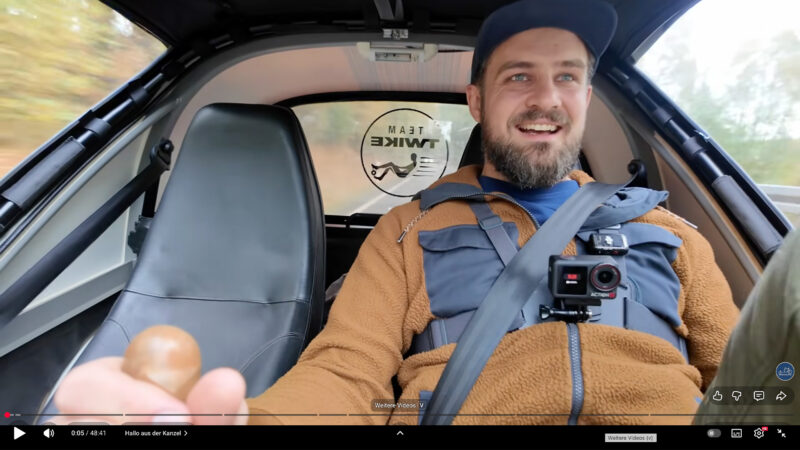
Thomas Bechtiger: Ten years ago, I rode a Twike 2000 kilometers from Zurich to the Norwegian capital Oslo in two and a half days. I wanted to do something new and creative and also show what a Twike can do. Of course, I also wanted to have fun. When I broke the world record, I made a bet with an electric vehicle manufacturer from Rosenthal in Germany that I could drive 2000 kilometers with an old Twike and old batteries. In short: that I could drive longer and further with my vehicle than with a new Twike. I won this bet two weeks ago: with a distance of 1740 kilometers and a driving time of 43 hours. I also drove 1500 kilometers without recharging the batteries. I broke the world record, which was 1000 kilometers without recharging.
Time: You originally wanted to drive 2000 kilometers with the Twike. It was 260 kilometers less. What was the reason?
Thomas Bechtiger: Rain, traffic and the temperature! At five to six degrees, the batteries lose their charge much faster, and the rain didn’t make it any easier for us either. The traffic was another reason: my 35-strong team and I drove the entire route in the Kloten industrial area, back and forth, back and forth, turning at the traffic circles. We had to brake a lot more than we thought between trucks and people busy at the end of the day. But I’m still very satisfied. Because out of 10,000 old battery cells, of which we were told “they were already dead” or “we’d better throw them away”, we selected around 8,000, dismantled them and made a new battery pack with several cells that were still good. That’s what we wanted to show that this is possible – and we didn’t do badly at all.
Source: zeitpunkt.ch