verlagshaus-jaumann.de, 24.08.2023
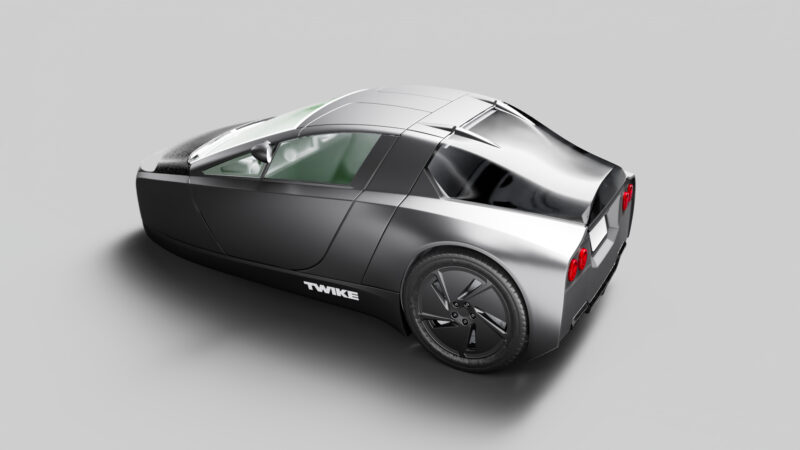
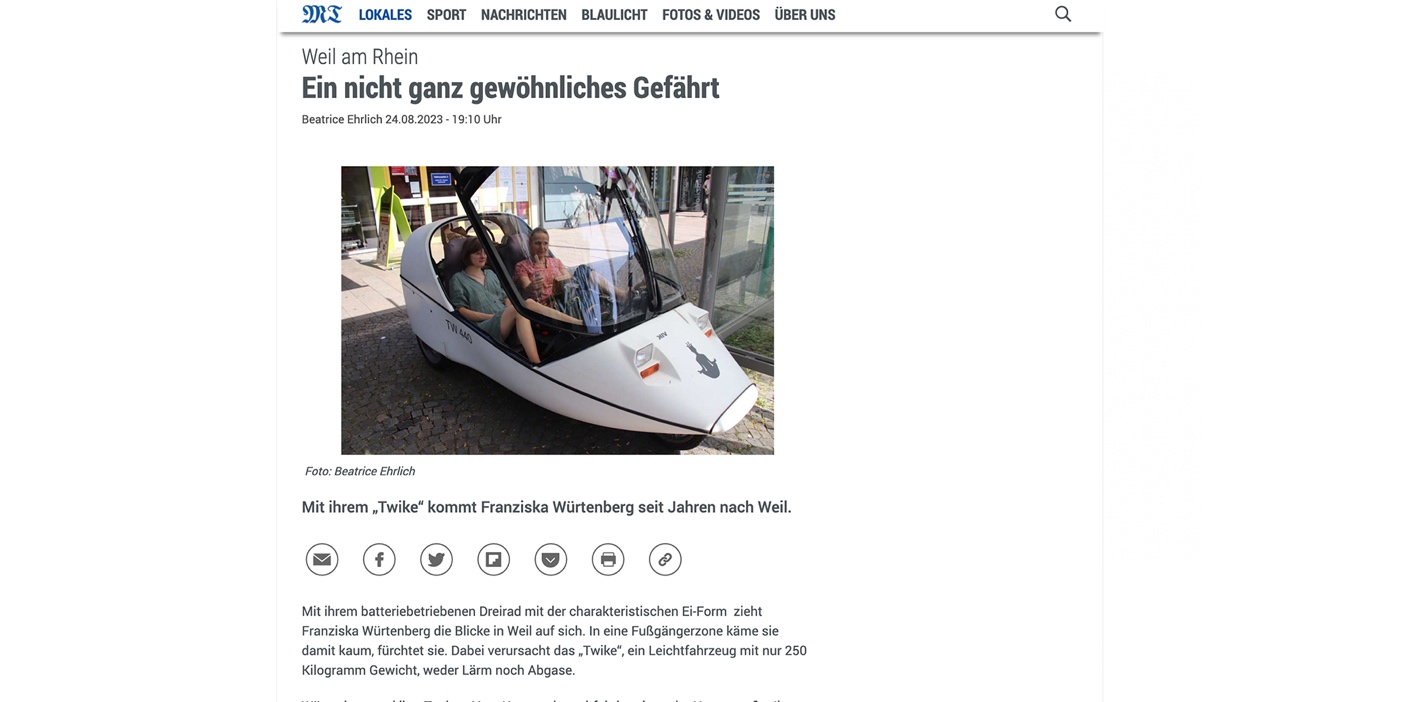
Franziska Würtenberg attracts attention in Weil with her battery-powered tricycle with its distinctive egg shape. She fears that she would hardly be able to enter a pedestrian zone with it. Yet the TWIKE, a light vehicle weighing only 250 kilograms, causes neither noise nor exhaust fumes.
Würtenberg and her daughter Yara Kunz are ready to depart on the main road. They have stowed their purchases in the rear of the vehicle. They eat a sandwich before heading back to Nuglar-St. Pantaleon in the canton of Solothurn. They regularly take trips to Weil in the TWIKE, Würtenberg reports. It can reach speeds of up to 100 kilometers per hour, although she usually drives more slowly. She comes to Weil to drink coffee, visit friends, or go shopping, especially in organic stores.
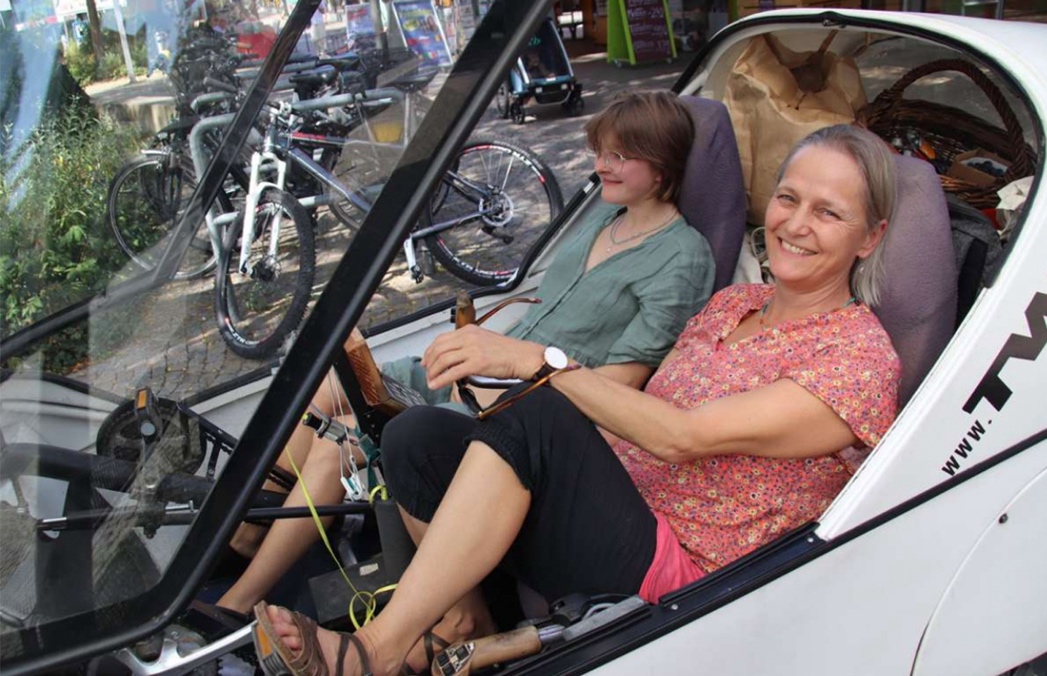
Würtenberg has already heard about the plans for a pedestrian zone on Hauptstraße. “That would be bad for me,” she says, because it would mean she would no longer be able to drive through with her battery-powered vehicle. She has had her TWIKE, which seats two people, for around 20 years. The vehicle, whose prototypes were developed by students in 1986 and which went into series production in 1995, is controlled with one hand. Switches are attached to a wooden handle to accelerate or brake. Würtenberg’s model, number 440, is registered as a motorcycle in Switzerland and has 180,623 kilometers on the clock. She even drives the TWIKE on the highway, albeit only for short distances. In the early 2000s, production of the TWIKE was transferred to a German investor. Since then, it has been further developed by the current TWIKE GmbH in Rosenthal. The successor model currently in development is expected to reach a top speed of up to 190 kilometers per hour and a range of 500 kilometers. “It’s the most environmentally friendly thing available at the moment,” says Würtenberg. Then she closes the hatch and drives off.