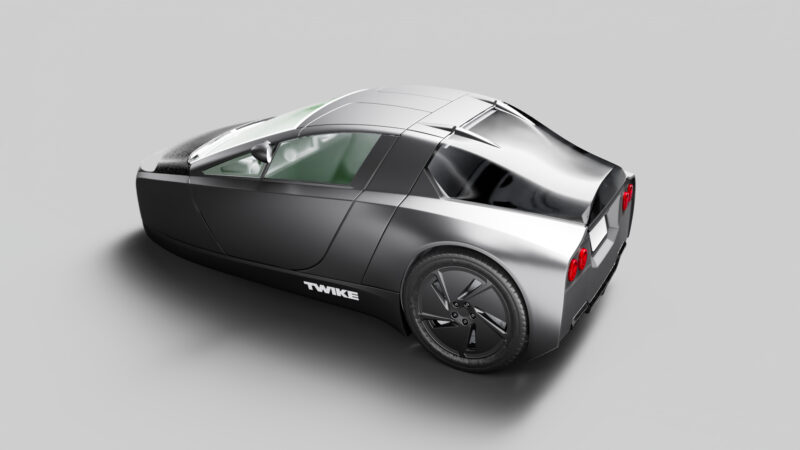
The world of the automobile is currently undergoing radical change. The political directive is to move away from the combustion engine and towards the electric motor. As the construction of such motorized vehicles is not a particular technical challenge, this is a great opportunity for small companies to gain a significant market share in this market. Fine Mobile GmbH has also recognized this opportunity and will soon be adding a larger model to its existing Twike portfolio.
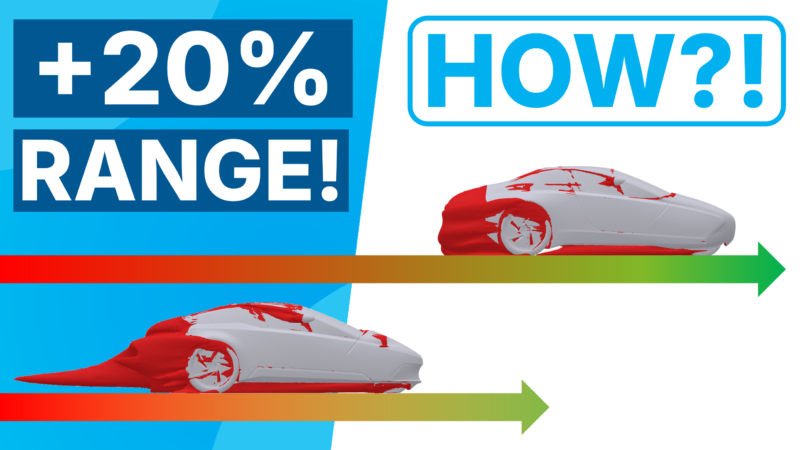
Vehicles with only three wheels are still attracting a lot of attention. This could change in the near future, because one less wheel means less weight and less rolling resistance, which translates into lower power requirements for driving the vehicle. In an age when energy is becoming a scarce and therefore more expensive commodity, our streets will probably be dominated by three-wheeled vehicles in the future.
It is probably not unreasonable to say that small niche providers today will be among the big players in just a few years, as they have been more flexible in responding to political requirements than large corporations, which have been too slow to introduce new drive concepts without political pressure.
Fine Mobile GmbH, which has been selling the Twike series since 1998, can expect to gain a substantial market share in the small electric vehicle sector. After Twike AG went bankrupt in 2002, all rights and production equipment were taken over from the bankruptcy estate. Since then, the tried-and-tested Twike vehicles have been produced in a small batch of 50 units per year in the small town of Rosenthal in Hesse. However, this could change quickly when the latest model, the Twike 5, hits the market in 2020. Building on the experience gained from over 1,000 Twike 3 models produced, this model will be a huge leap into the future. Instead of 85 km/h, it will be able to reach speeds of up to 190 km/h. And the
Es ist wohl nicht vermessen, wenn die Aussage getroffen wird, dass heute noch kleine Nischenanbieter schon in wenigen Jahren zu den Großen gezählt werden, da diese flexibler auf politische Vorgaben reagiert haben, als große Konzerne, die zu träge waren, neue Antriebskonzepte ohne politischen Druck einzuführen.
Große Chancen auf einen satten Marktanteil im Bereich kleiner E-Fahrzeuge kann sich das Unternehmen Fine Mobile GmbH ausrechnen, das die Twike-Reihe schon seit 1998 vertreibt. Nach dem Konkurs der Twike AG im Jahre 2002 wurden alle Rechte und Fertigungsmittel aus der Konkursmasse übernommen. Seither werden die bewährten Twike-Fahrzeuge in einer Kleinauflage von 50 Stück pro Jahr im hessischen Örtchen Rosenthal produziert. Dies könnte sich jedoch rasch ändern, wenn das neueste Modell ›Twike 5‹ im Jahre 2020 auf den Markt kommt. Aufbauend auf der Erfahrung von über 1 000 produzierten Modellen vom Typ ›Twike 3‹ wird dieses Modell ein gewaltiger Sprung in die Zukunft sein. Anstatt mit 85 km/h ist man mit bis zu 190 km/h unterwegs. Und auch die Reichweite ist für viele Zwecke völlig ausreichend: Je nach Akku-Ausstattung beträgt diese zwischen 150 und 500 Kilometer.
Interesting construction
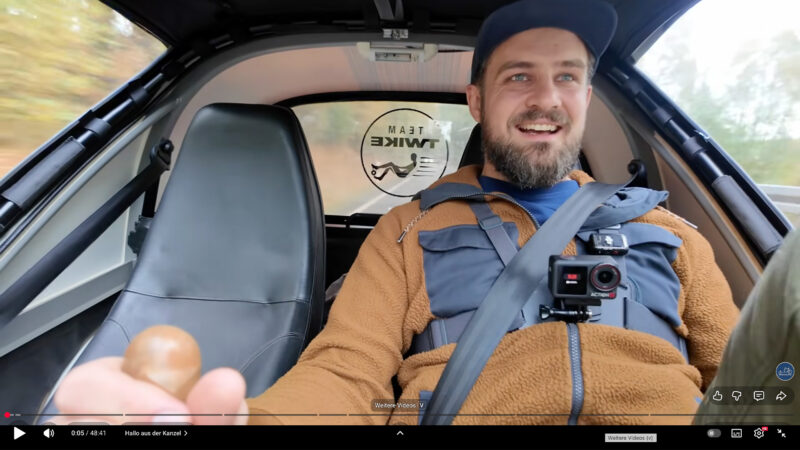
The concept of the Twike vehicles is unusual. This starts with the familiar steering wheel, which has had to make way for a kind of joystick, continues with the accelerator using a selector switch and does not end with the option of generating additional power using a pedal set. The fact that a conventional side-opening door has been replaced by a hood that opens upwards and forwards is also one of the Twike’s peculiarities, making it particularly easy to park in the smallest of spaces. German bureaucracy has prevented the Twike vehicles from weighing even less and thus using electrical energy even more sparingly, as real glass is required for the windows. The Twike 3 is powered by a three-phase electric motor with a rated output of 3 kW. This motor has been refined compared to the original model and now has a temperature sensor that prevents temperatures above 130 degrees Celsius, which could irreparably damage the paint on the motor winding.
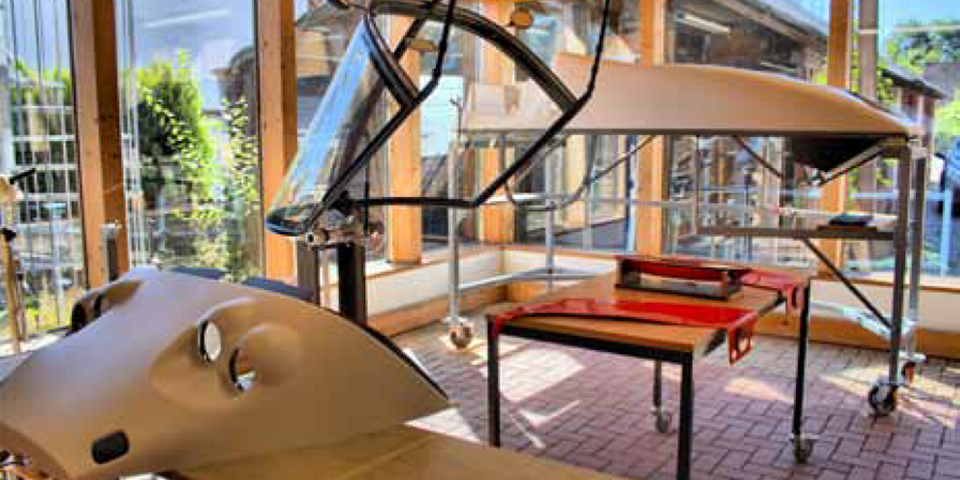
Die Fertigung jeden Twike-Fahrzeugs erfolgt in bester handwerklicher Kunst, wie sie nur in einer Manufaktur zu finden ist. Um das Fahrzeug dennoch zu einem bezahlbaren Preis anbieten zu können, werden nahezu alle für das Fahrzeug benötigten Teile von externen Spezialisten bezogen. Auf diese Weise ist es möglich, die Teilequalität hoch und die Fixkosten gering zu gehalten.
Für die Montage der Einzelteile werden teils aufwendige Vorrichtungen genutzt, die selbst angefertigt wurden oder aus der Konkursmasse der Schweizer Swiss LEM AG stammen. Natürlich ist auch eigenes Know-how im Laufe der Zeit in großer Zahl in den Montageprozess eingeflossen. So ist es beispielsweise nicht trivial, die Fensterscheiben passgenau und dauerhaft mit der Karosserie zu verkleben. Dazu wird nicht nur der passende Klebstoff benötigt, sondern ist auch auf die richtige Luftfeuchtigkeit zu achten und genug Zeit im Montageprozess einzuplanen, damit der Klebstoff aushärten kann. Besonderes Wissen musste auch beim Wechselrichter eingebracht werden: Das im Twike 3 eingebaute Modell ist in der Lage, Lade- und Entladeströme zu handhaben. Für das Twike 5 kommt ein weiter entwickeltes Modell zum Einsatz, das sogar noch leistungsstärker, zudem kompakter ist. In jedem Fall gilt es, die Batteriespannung von 350 Volt zu managen, was nur mit entsprechend hochwertigen Bauteilen gelingt.
High battery power
It is interesting to note that the vehicle battery consists of modules, the smallest unit of which is a round cell with a voltage of 3.6 volts. 56 round cells are combined in a parallel connection of 4 and a series connection of 14 cells in one housing, resulting in a total voltage of 50.4 volts. Another seven of these modules are combined to form a battery block, which has a total output of 353 volts or 3.5 kWh. Two battery blocks therefore have an output of seven kilowatt hours. This would give a TWIKE 3, whose motor, as mentioned, has a rated output of three kilowatts, a range of around 160 kilometers. In winter, the range can be around 30 percent less.
A battery pack can withstand around 4,500 charging cycles before it has reached its technical service life. Assuming five charging cycles per week, this would be a service life of seventeen years before the battery needs to be replaced. Fine Mobile GmbH gives the all-clear with regard to the fire hazard of rechargeable batteries, as their rechargeable batteries, which come from the Japanese company Murata, have cells that are filled with comparatively little cobalt. The manganese content, on the other hand, is higher. This mixture is intended to ensure that the batteries can be operated safely. According to the manufacturer, the cells can be operated at temperatures of up to 80 degrees Celsius without any problems. In addition, a temperature detection routine regulates the process down if the battery reaches a critical temperature range. A fuse also triggers at 72 degrees Celsius, meaning that a battery fire is practically impossible.
While motorcycle rims and tires were used in the early days of the Twike, Smart car tires with a size of 135/70 R15 are now used. The reason for this is their greater stability against lateral forces. For owners of older models, a conversion kit is available to enable them to use the larger tires. One of the rewards of this investment is a very long service life, as these tires are subject to very little wear, which is due to the smooth starting of the electronically controlled twikes. When using all-season tires, it is therefore possible to do without a tire change for many years.
The electronically regulated, stable on-board voltage supply of 13.5 volts for Twikes not only benefits riding comfort, but also means that lamps almost never fail due to overvoltage. This can be a real nuisance in vehicles with a combustion engine, but is virtually unheard of in Twikes. If you do need to change a bulb, you can easily do it yourself as the sockets are easily accessible. The range of the Twikes can be increased by up to 15 percent thanks to the pedals fitted in the interior. Many Twike riders regularly use this feature to increase their fitness, but also like to ride without pedaling when sporting activity is not required. While the pedal movements in the Twike 3 are mechanically transmitted to a gearbox to harness muscle power, this solution has been replaced by a purely electric approach in the upcoming TWIKE 5. This saves on many components and thus reduces the weight.
In general, the Twike 5 incorporates many ideas that will delight die-hard Twikerians. For example, there is the newly designed front wheel suspension, which now allows tires to be changed just as effortlessly as on conventional cars. In addition to the standard fitting of car tires, the design of the rear axle is a feature that will give this Twike a very special ride comfort. The design of the rigid axle with a swivel/sliding joint is very unusual for a vehicle of this type, as this axle design is rarely used in conventional vehicles for cost reasons.
It is clear that the Twikes are a real alternative to conventional second and third vehicles with combustion engines. In view of the large number of environmental activists, it should be no problem to achieve the targeted unit numbers for the new Twike 5. Now it is the turn of the targeted sections of the population to put their desire for a clean environment into action.
Source and images: weltderfertigung.de (page 58)