We have already reported on the optimum center of gravity of a three-wheeled vehicle in an earlier blog post.
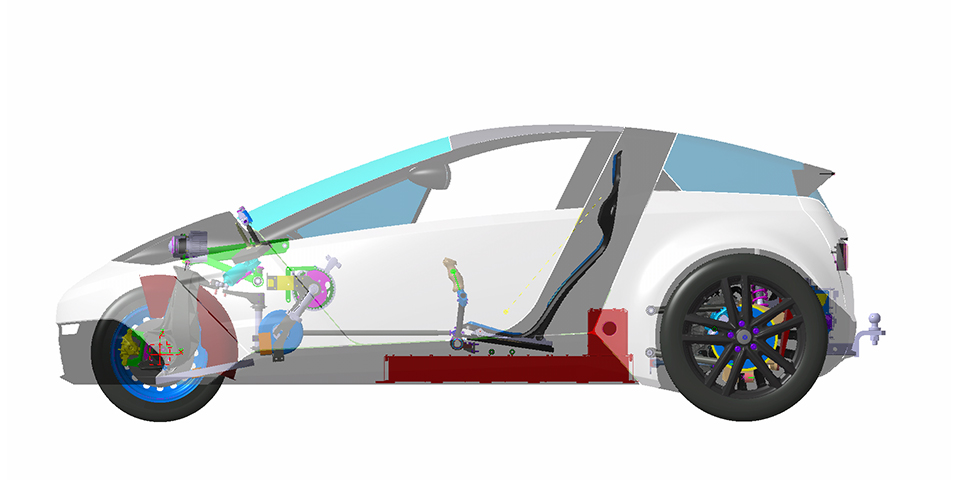
As the battery of an electric vehicle is known to represent a considerable part of the total weight of an electric vehicle, it makes sense to position the 350 V energy storage unit in the area of the desired target center of gravity of the vehicle. In the TWIKE 5, with the maximum battery capacity of around 30 kWh, the base frame will be filled with up to six TWIKE batteries, each weighing around 19 kg.
The unprecedentedly high energy density of more than 255 Wh/kg is partly due to the decision to use the latest 18650 format LiIon cell. However, the optimized packaging in terms of its lightweight construction and an innovative airflow system for uniform temperature control and preconditioning of the entire energy pack also make a significant contribution. Consideration was also given to the possibility of removing the battery in the event of a later replacement or conversion, as well as the stiffening effect for the body as a whole.
A so-called master box houses the monitoring electronics, is visibly enthroned behind the row of seats on the actual energy storage unit and represents the interface to the vehicle’s other high-voltage system. In the WLTP cycle, this results in a range of more than 400 km; in practice, we expect to exceed the 613 km already experienced with the TWIKE 3.