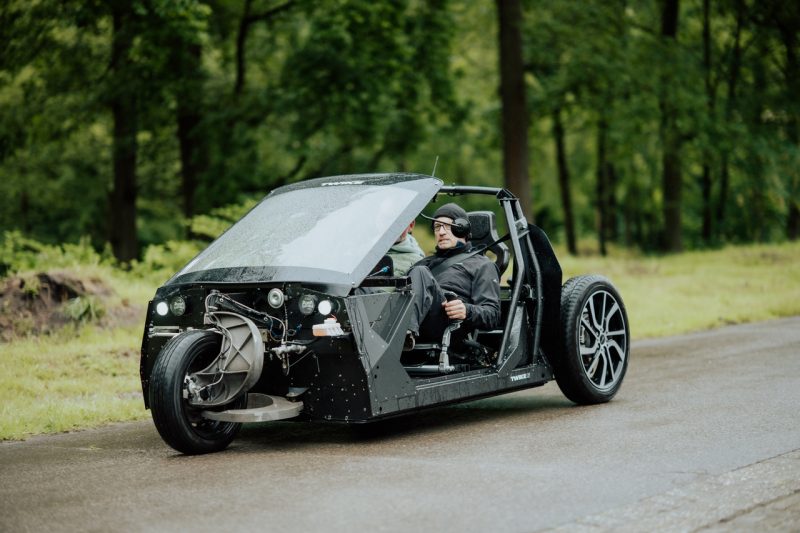
POV: Test Drive in the TWIKE 5 with Bart Viaene
Confident in acceleration and impressively comfortable.
Greater efficiency. And more space. Thanks to the optimized rear design, the TWIKE 5’s luggage compartment has been expanded to 372 liters. Here, we show how the new design creates additional storage space.
Once again this year, it’s back—the now legendary TWIKE annual calendar. In 2026, it’s all about the final development phase.
The year 2025 demonstrated how close the TWIKE 5 is to series production readiness: successful test drives, targeted aerodynamic optimizations, and sound decisions for the assembly process. Supported by a strong community, the focus is now clearly on the series launch starting in 2026.
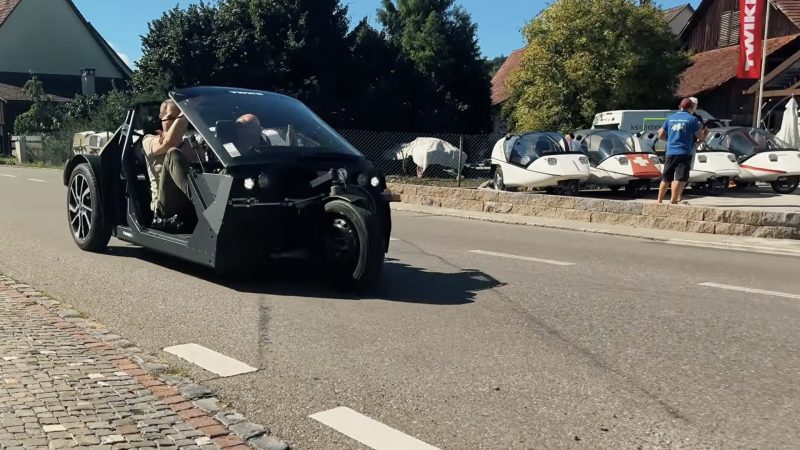
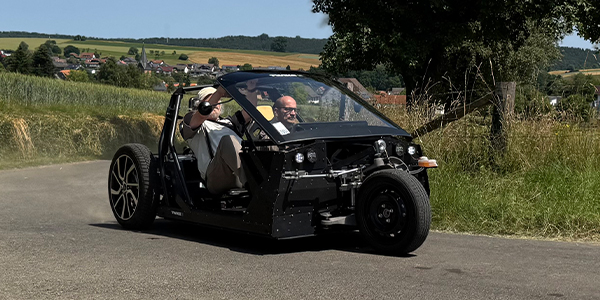
Tilmann from the cycling group visited us and not only drove the Twike 3, but also experienced an exclusive test drive in the TWIKE 5!
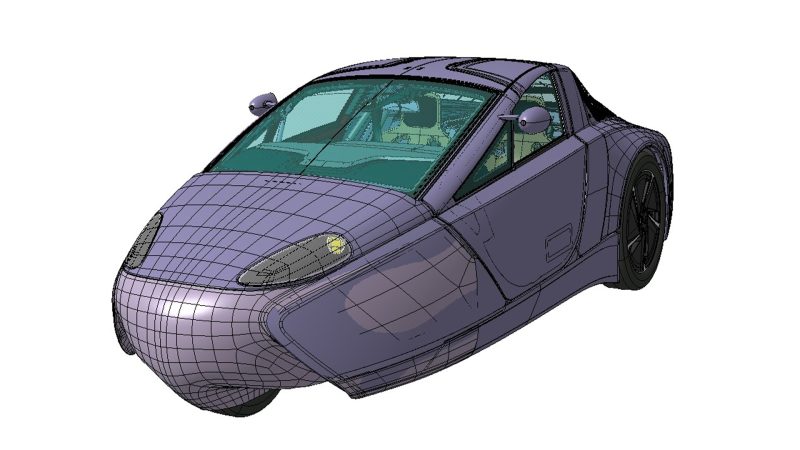
How does aerodynamics contribute to the efficiency of the TWIKE 5? CEO Wouter Remmerie of AirShaper shows in the video how the vehicle’s design was optimized on the platform – and what impact this has on energy consumption
Cameras, interviews and test drives: The TWIKE 5 was once again in the spotlight!
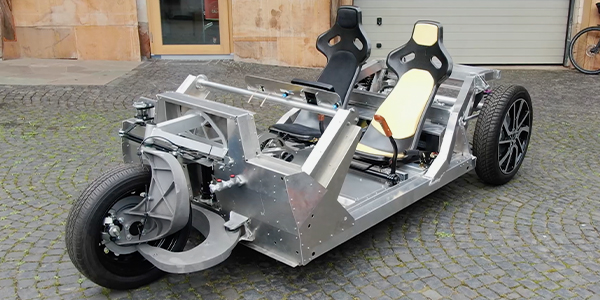
The TWIKE 5 is in its final development phase: Following successful testing of the first prototypes, ECE homologation will take place. After a final funding round, series production will begin with two vehicles per day. With the exclusive Pioneer Edition, those who pre-order can secure their reservation and benefit from attractive advantages
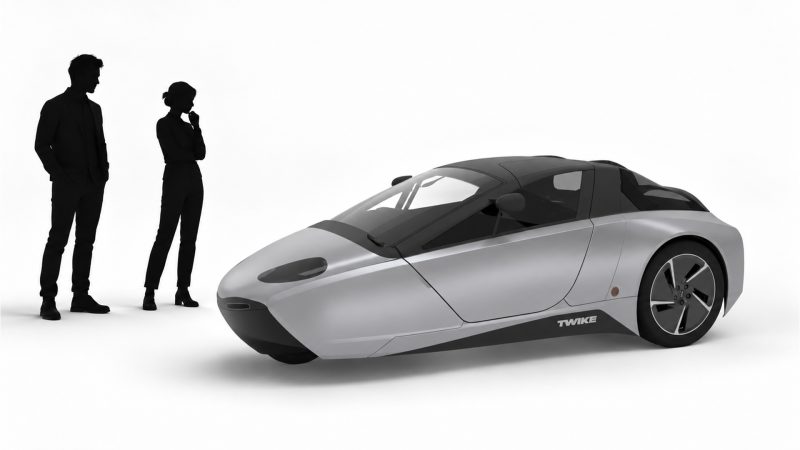
„The Twike5 … is a compact sports car for active drivers and enjoyable mMn a completely different segment (Toyota Yaris GR, Porsche Cayman, etc.). The Twike is a18> more suitable for enthusiasts who simply have no desire to spend on a26> boring cars and enjoy driving. However, niche manufacturers such as Caterham, Radical, and MorganContinue reading “TWIKE 5 – THE SPORTS CAR”
With the TWIKE 5, we have significantly reduced aerodynamic drag through targeted optimisation of the front and rear sections – and thus ensured a long range without the need for a larger battery. The key to this was the aerodynamic fine-tuning, supported by powerful simulation software. More on this soon – including figures, tools and insights!