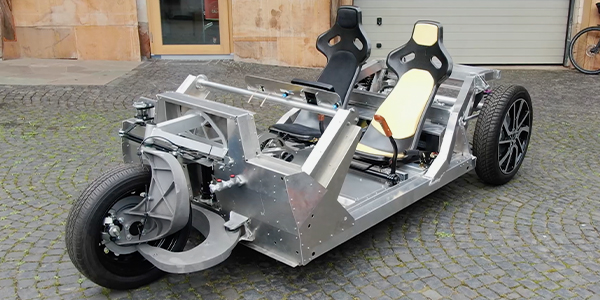
Back in 2024, we reported on how the frame of our driver test vehicle—which was initially bolted together—had evolved into an aluminum structure that was primarily bonded and riveted.
We have now taken a decisive step forward: The complete frame design of the TWIKE 5, intended for series production, has been finalized in CAD—including all casting nodes and joint locations.
This provides a defined design basis for the final technical validation and further preparation for production.
But what does this step actually mean?
What’s the story behind the “Body in Black”?
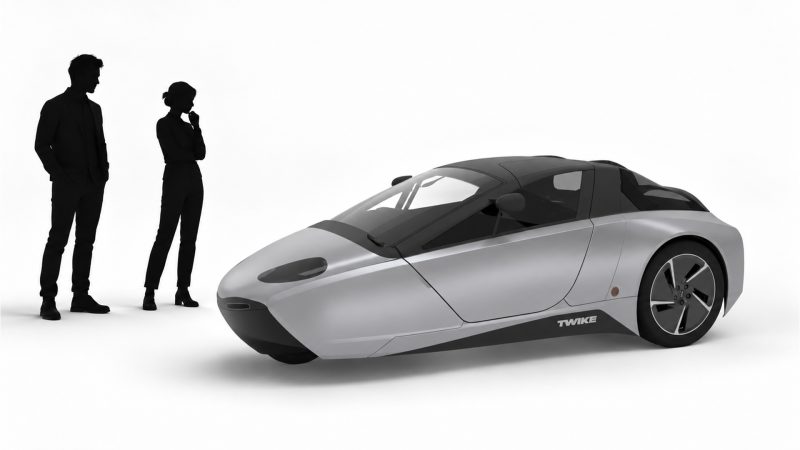
When you look at the TWIKE 5, the first thing you notice is its unusual shape.
Beneath it lies an aluminum structure designed for lightweight construction, which is essential to making our vehicle concept possible in the first place.
The so-called body-in-white (BIW) forms the vehicle’s load-bearing structure. It connects the key assemblies, absorbs forces from the chassis, and provides the structural foundation for integrating the powertrain, battery, interior, and exterior body panels.
By the way, our body-in-white is black. That’s why we like to call it our “body-in-black.”
The design is based on a core principle of the TWIKE: minimizing mass as much as possible without compromising the necessary strength and rigidity.
To achieve this, we rely on a self-supporting aluminum sheet structure with strategically placed reinforcements and fasteners.
In areas subject to particularly high stress—such as the suspension mountings—the forces are transferred to the surrounding frame structure via appropriately designed connecting components.
From the first prototype to the planned production model
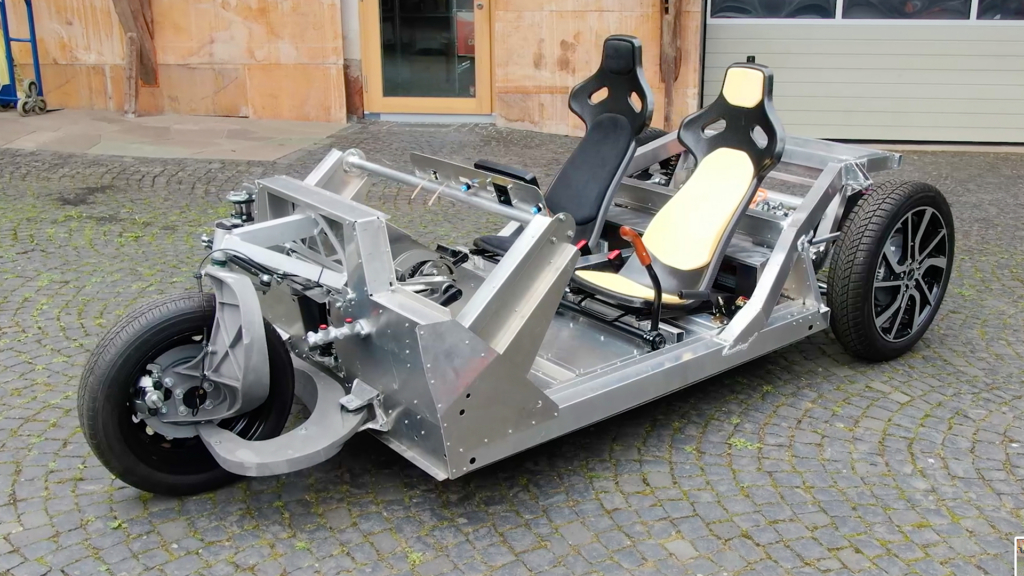
With the first driver test vehicle, the initial focus was on putting the vehicle architecture through practical testing and gathering initial driving experience as quickly as possible.
For that reason, the frame panels were initially bolted together.
This design approach served its purpose: We were able to get the vehicle moving, observe how the individual systems worked together, and gain valuable insights for further development.
For the next stage of development, the frame was completely redesigned.
The initially bolted joints were replaced by a design in which the aluminum sheets are primarily bonded and riveted.
In this process, the adhesive accounts for a significant portion of the force transmission. The rivets hold the components in place during curing and also contribute to the bond.
The joints were also further developed to effectively transfer forces from the suspension to the frame structure.
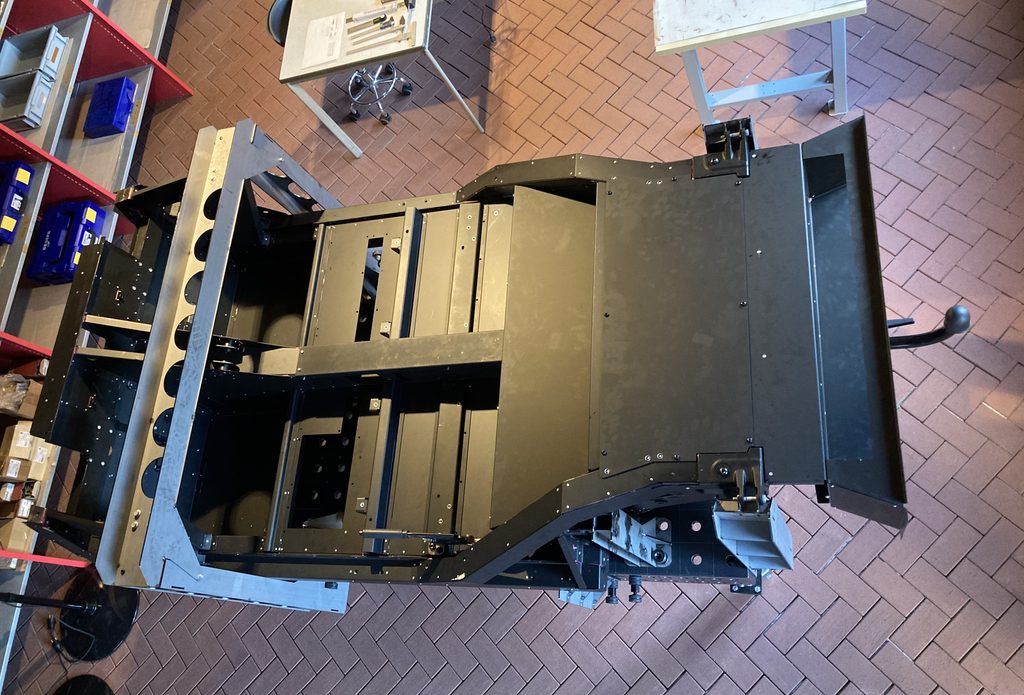
We had already introduced this development back in 2024.
What’s new since then?
While the focus back then was primarily on the design principle and its first practical application, the emphasis has since shifted to the complete development of the frame structure intended for mass production.
This includes not only the external geometry and the individual sheet metal parts, but also the castings, all intended joints, and the interfaces with adjacent assemblies.
After all, a vehicle frame must do more than just function structurally.
Its individual parts must be manufacturable with the required precision. The assemblies must fit together. And the selected manufacturing processes must be suitable for the intended production volume.
These requirements are closely interrelated, especially in a lightweight vehicle like the TWIKE 5.
For example, a change to a chassis mounting can affect adjacent sheet metal, fasteners, or the subsequent assembly process.
That is why it is important to view the design as a cohesive system.
An important step: CAD frozen
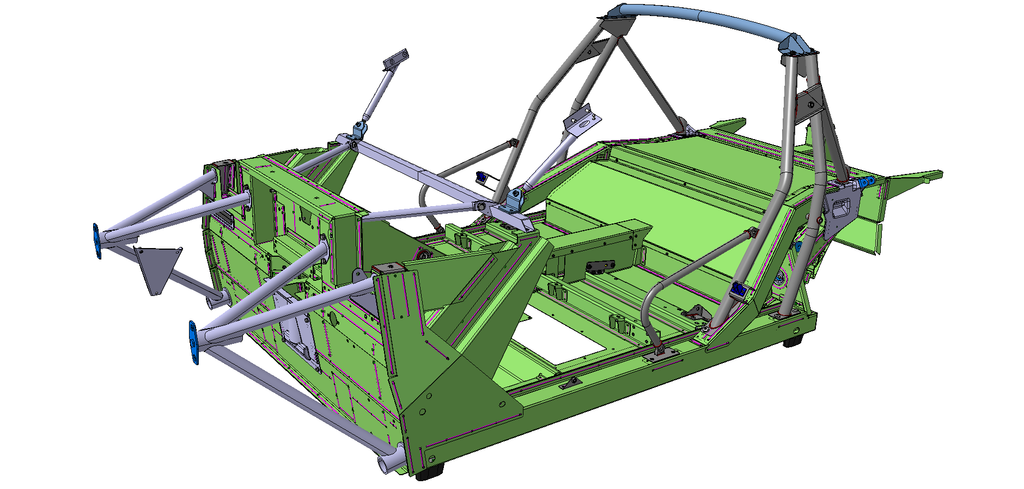
We have now reached this stage of development.
The complete frame structure, including all cast joints and connection points, has been finalized in CAD.
This gives us a defined design status, on the basis of which we can continue to move forward with the remaining technical verifications and production preparations.
At this point, we no longer expect any fundamental design changes. Of course, adjustments resulting from the final validation remain possible.
What happens next?
With the CAD budget frozen, three tasks in particular are now taking center stage:
Technical Validation: The remaining calculations and tests are intended to confirm that the design meets the specified requirements. This also includes the planned crash analyses.
Suppliers and Manufacturing Costs: Based on the current design status, we are further refining and updating the manufacturing processes and supplier quotes. In doing so, we consider not only the prices of individual components, but also manufacturing precision, assembly effort, and quality assurance.
Production Preparation: At the same time, this involves the necessary tools and fixtures, as well as the planning of joining, assembly, and inspection processes for reproducible small-batch production.
These steps build on one another and must be carefully coordinated.
A “frozen” CAD status therefore does not necessarily mean that the technical validation is complete or that mass production can begin immediately.
However, it lays the necessary groundwork for tackling these next tasks with a fully defined design.
Piece by piece, toward a complete vehicle
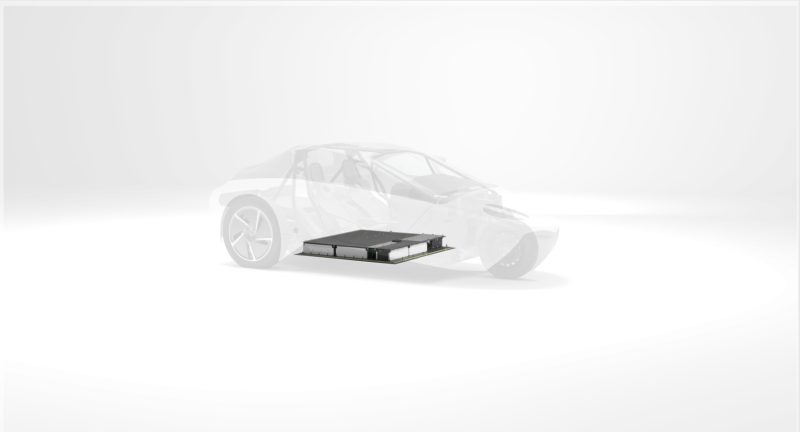
Back in September, we gave you a glimpse into the design of our HV battery.
Using the “Body in Black,” we will now examine the structure into which this and many other assemblies are integrated.
Both topics demonstrate how closely the development of a vehicle is intertwined.
Not every component can be considered in isolation. Only when the interfaces fit together can a functioning overall system be created.
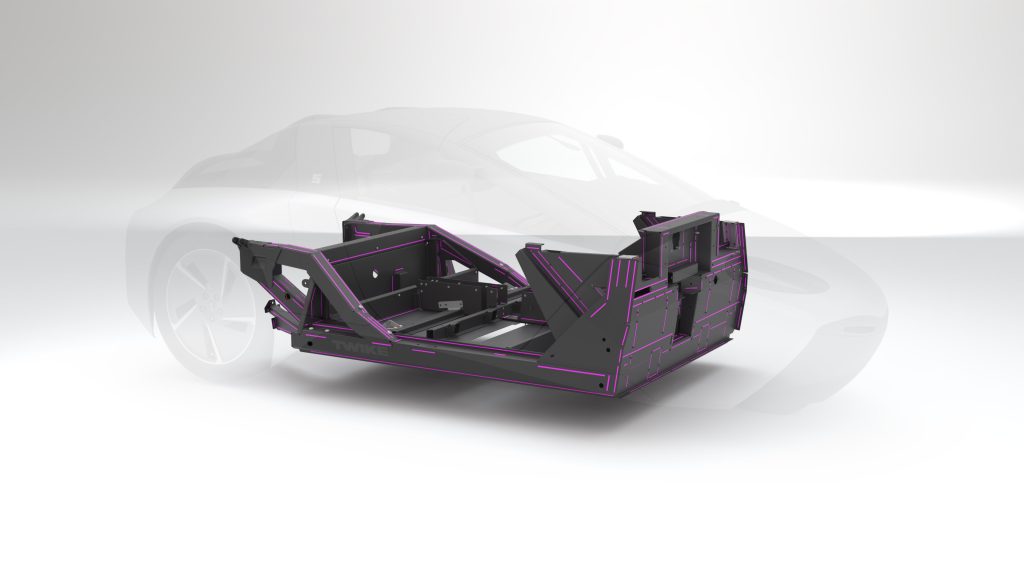
The finalization of the CAD design for our Body in Black is therefore an important step on the path from a prototype to mass production.
We still have to finalize the verification and prepare for production. But the design foundation on which we will build these next steps is in place.
And we want to continue sharing this journey with you as transparently as possible.
Related Articles
These two earlier publications document the development of our Body in Black: