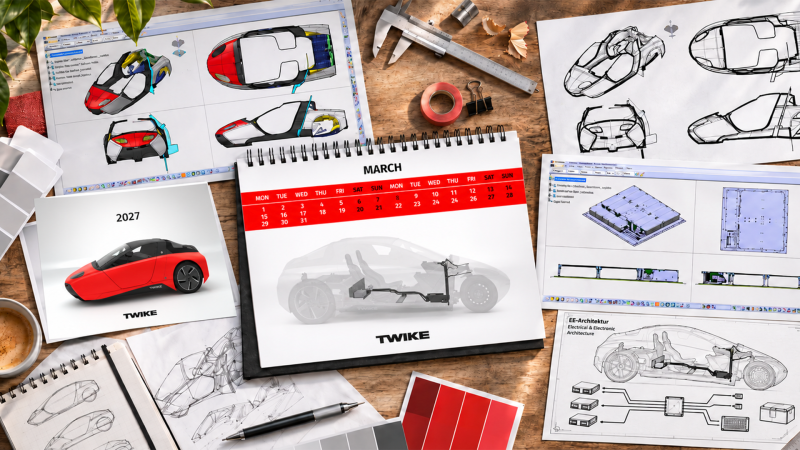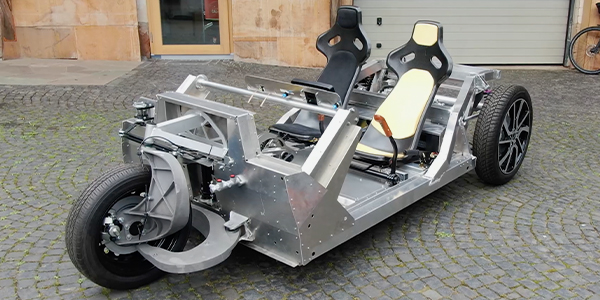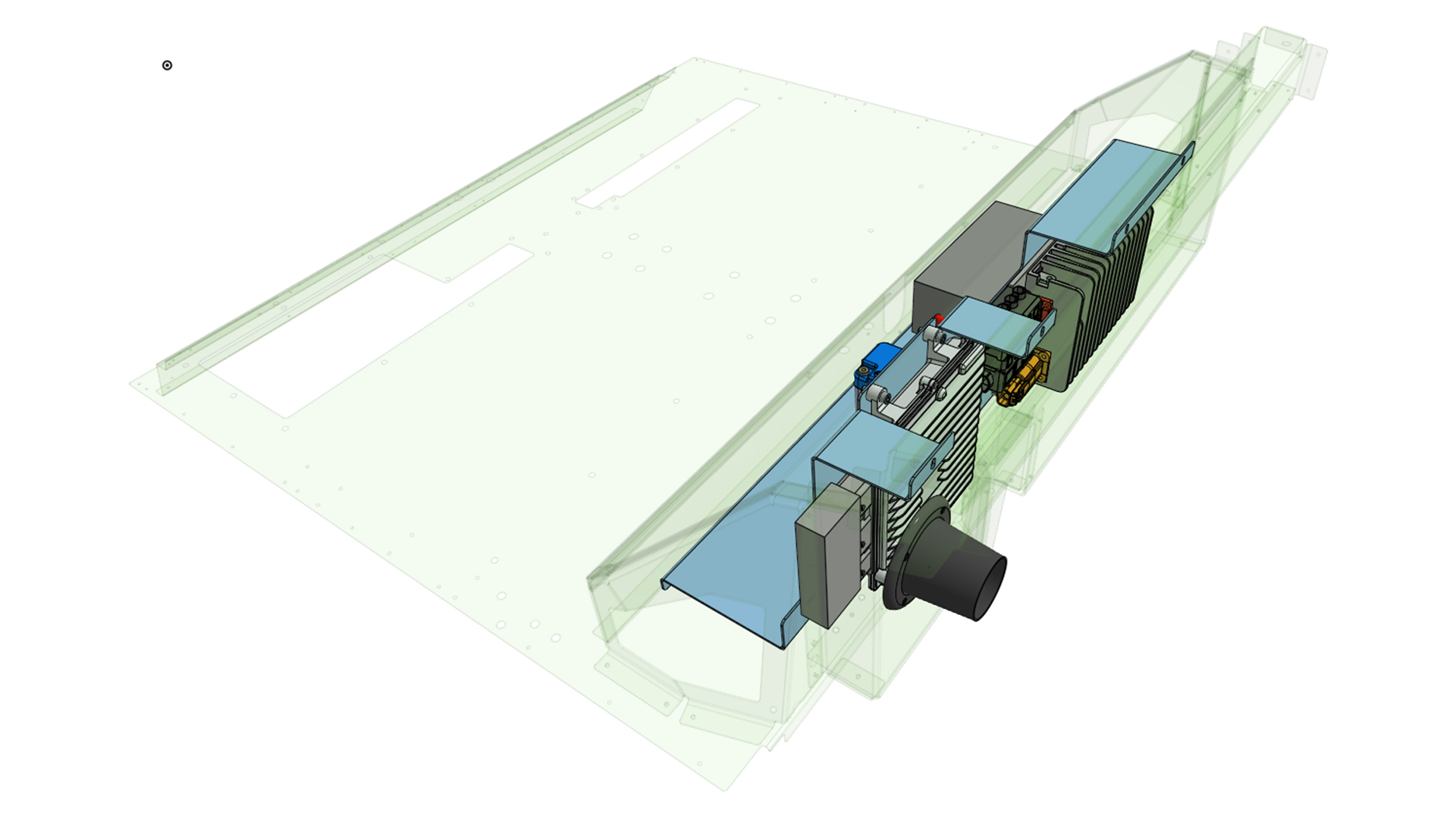
The March feature of our 2027 TWIKE calendar shows how the vehicle structure—which is still largely open—is fitted with one of its most important electrical assemblies: a pre-assembled electronics inlay containing the majority of the vehicle’s wiring harness.
What makes this special is not so much a single component as the way we consolidate, prepare, and integrate numerous functions into the vehicle.
Many functions, one assembly
On a common inlay, we mount, among other things, the vehicle control unit (VCU), two DC/DC converters for the 400/12 V and 36/400 V voltage levels, fuses, relays, and the 12-V auxiliary battery.
Most of the wiring harness is also part of this assembly.
Instead of installing the components individually in the vehicle and performing time-consuming wiring there, the entire unit is pre-assembled and electrically tested at a separate workstation.
This simplifies quality assurance and reduces the amount of work required during the actual final vehicle assembly.
First implement, then roll out
In the body-in-white (BIW), we have designated a separate installation space for the assembly—our so-called connection box.
The prepared inlay is inserted into this installation space from above. The wiring harness can then be routed through the vehicle frame—which is still open and easily accessible—and positioned as intended.
The assembly sequence was deliberately chosen: Before other components and trim pieces restrict access, the cable routes are still freely accessible.
What would be complicated to install later can now be easily attached.
It is precisely these considerations that are crucial to our goal of enabling a single technician to fully assemble a TWIKE 5 within one workday using pre-assembled subassemblies.
Well-thought-out for service as well
The design also takes into account future maintenance and repairs.
The entire inlay can be removed if necessary. As a rule, however, targeted fault diagnosis should suffice to replace only the affected component.
In this way, we combine efficient assembly with good accessibility and ease of repair.
The Connection Box is an example of our development philosophy: managing complexity where it arises—so that final assembly is as simple as possible.
We’ll show you more of this step by step in our TWIKE Calendar 2027.
Let’s TWIKE!