The development of the TWIKE 5 is increasingly focusing on details where individual requirements can no longer be considered separately. Aerodynamics, fresh-air supply, component structure, manufacturability, and design all need to work together.
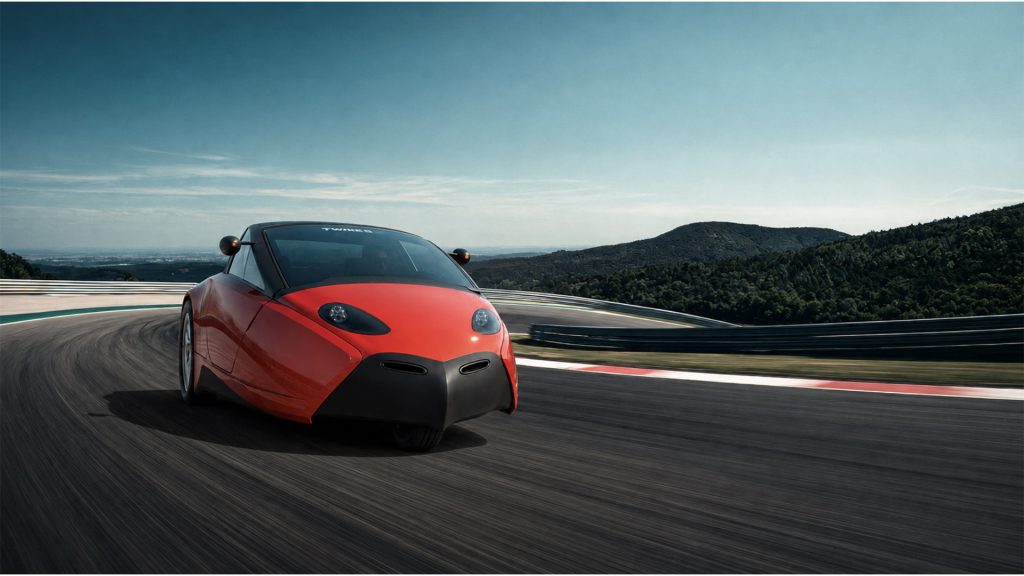
Our current concept for the front of the TWIKE 5 emerged from exactly this kind of challenge. Internally, we call it the “Falcon Front.”
The shape was not created from a purely stylistic idea. Instead, it results from several technical requirements converging at this part of the vehicle – and it is precisely this interaction that gives the design its distinctive character.
Air for the rear diffuser
One key insight from our aerodynamic optimization concerns an area you might not immediately associate with the front of the vehicle: the rear.
For the rear diffuser to work as effectively as possible, it needs a sufficient flow of air underneath the vehicle. How well this works is already determined right at the front.
The free-standing front wheel plays a particularly important role. The incoming airflow should split as cleanly and predictably as possible ahead of the wheel, pass around its sides and underneath it, and then rejoin in an orderly manner behind the wheel.
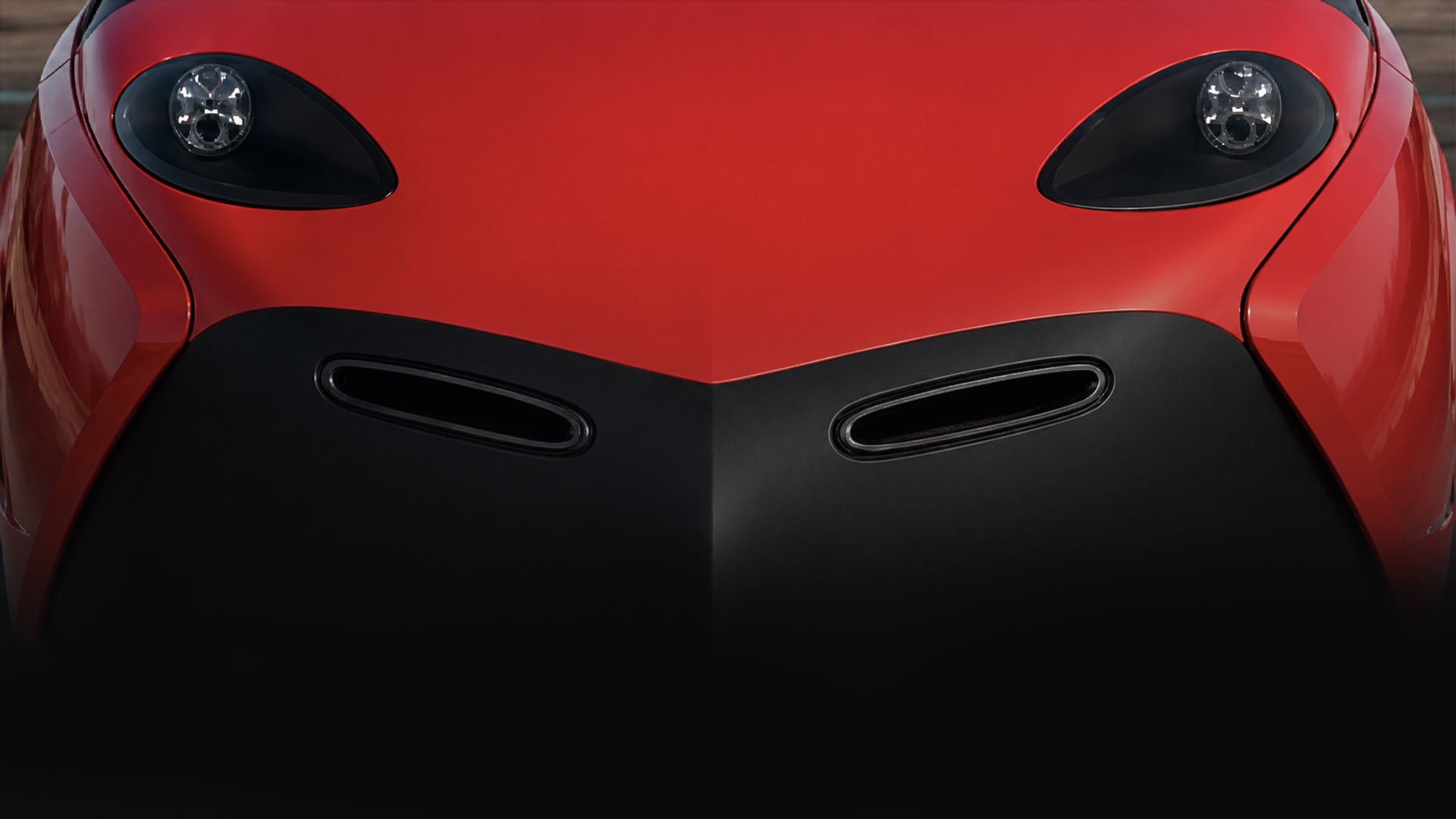
This is where the pronounced central beak of the Falcon Front comes into play. It begins dividing the airflow early and helps guide it toward the areas where we want the air to continue beneath or along the sides of the vehicle.
This geometry also becomes interesting when the airflow approaches at a slight angle. In real driving conditions, air does not always hit a vehicle perfectly head-on. Even a moderate crosswind changes the angle of attack. The pronounced beak edge can help organize the airflow early and continue directing it in the desired direction.
The front thus becomes a functional part of a continuous aerodynamic concept – from the air’s first point of contact all the way to the rear diffuser.
Fresh air from the high-pressure zone
A second important function is located directly at the front of the vehicle.
During driving, a high-pressure zone develops there. This pressure can be used to draw fresh air into the cabin with as little additional effort as possible.
In the future, this airflow could also become relevant for the cooling-air requirements of a potential air-conditioning system.
What matters is not only the amount of air available, but also the position of the air intake.
The closer an intake is to the road surface, the greater the likelihood of taking in stirred-up dust, dirt particles and, on wet roads, water. For this reason, the two air intakes of the Falcon Front are deliberately positioned relatively high within the high-pressure zone.
The aim is to draw in air that is as clean as possible right from the start and thereby reduce the load on the downstream filtration system.
The openings are therefore neither decorative elements nor conventional cooling vents. Their position, cross-section, and integration into the front are determined by a specific aerodynamic function.
Why “Falcon Front”?
When designing the air-guiding front side panels, their shape already reminded us of a bird in a dive.
As we continued working on the front, another observation emerged: on a falcon’s head, the natural air intakes are also positioned where they can be functionally integrated into an aerodynamically efficient overall shape.
This analogy led us to the two side air intakes and the central beak edge of the current design.
The goal is not to formally imitate nature. What is more interesting is that similar functional requirements can sometimes lead to surprisingly similar geometric solutions.
This is how a technical challenge ultimately evolved into the Falcon Front.
Form follows function – and manufacturing
Aerodynamics alone, however, are not enough to create a good component.
The front must also be economical and reproducible to manufacture. That is why we are already considering tooling requirements during the design process, with particular attention to making the components as easy as possible to remove from their molds.
At the same time, clear and robust interfaces with the adjacent exterior body panels are required.
There is also a very practical consideration: the front of a vehicle is one of the areas particularly exposed to damage in minor accidents or parking incidents. The construction should therefore allow damaged front components to be replaced as selectively as possible, without having to replace unnecessarily large sections of the exterior bodywork.
Serviceability and ease of repair therefore also influence the design from an early stage.
Technology gets a face
For us, the Falcon Front is a good example of how we develop the TWIKE 5.
We do not first define a shape and then try to fit the technology inside it.
Instead, we seek to understand airflow, connect different functions, and consider manufacturing and repairability from the outset – and the shape emerges from that process.
The fact that this shape ultimately develops a strong identity of its own is a welcome side effect.
The design shown here will continue to be refined during the next stages of development. Its fundamental functional idea, however, is already clear: the front should not merely cut through the airflow – it should guide it.
Let’s TWIKE!