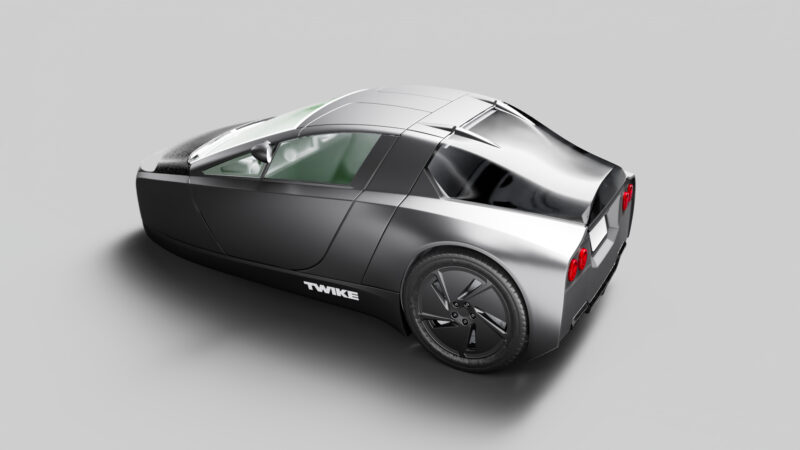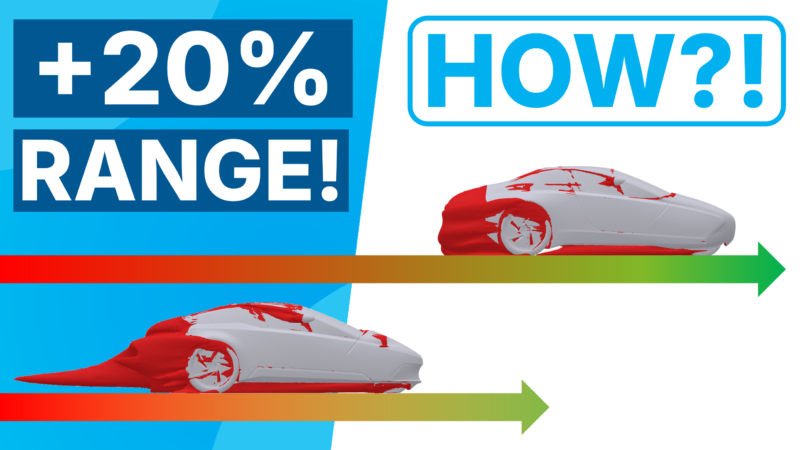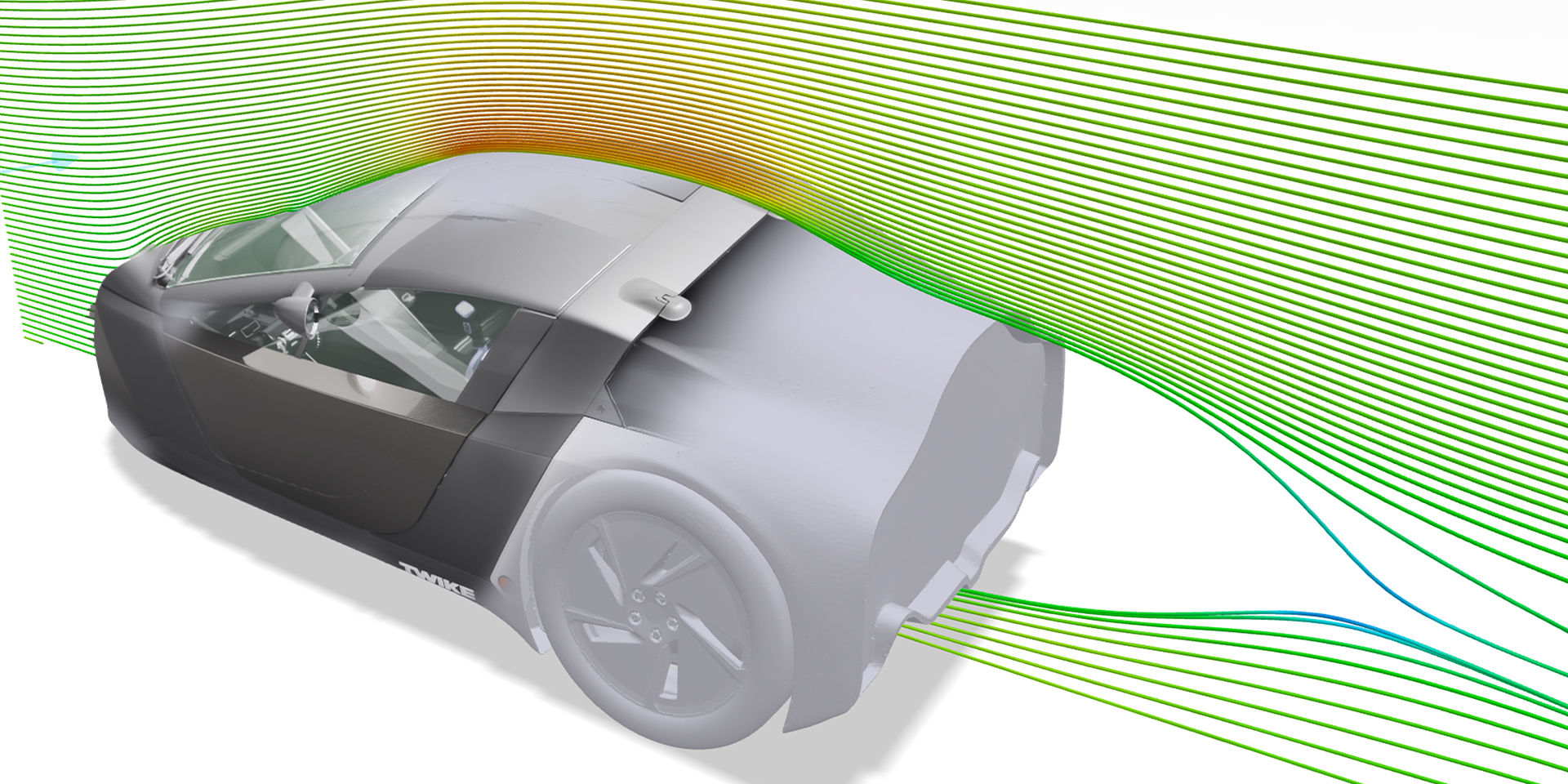
In addition to vehicle weight and frontal area, the aerodynamic coefficient has the greatest influence on the consumption, and thus the range, of an electric vehicle. It would be a big mistake to ignore the aerodynamic coefficient cw, because in practice it is one of the most influential factors on the economy of the vehicle. And if we hadn’t questioned this value specifically for the TWIKE 5 and optimized it with the help of powerful simulation software, consumption would probably have been 2 kWh higher than the 7 kWh/100 km that is now possible. In practice, this optimization, which at first glance seems insignificant, allows for a range that is about 120 km longer without having to install more batteries in the vehicle, which would have increased its weight.
In order not to slow down the development process, we concentrated on the front and rear sections. No particular improvements were expected for the hood, which is located in the middle of the vehicle, the window frame, and the windshield, which is subject to regulatory requirements. Furthermore, design decisions had already been made in this area, which are interrelated in a complex manner.
The most striking change is the design adjustment to the rear section, which is also somewhat similar to the optimization routine also slightly extended in length has been extended. But also the front section was slightly sanded, which overall slightly changed the appearance slightly change and in our opinion even improve it overall appearance.
We will announce the resistance coefficient determined from the simulation at a later date and also provide more detailed insight into the process, the software used, and the experts involved. Until then, stay tuned!