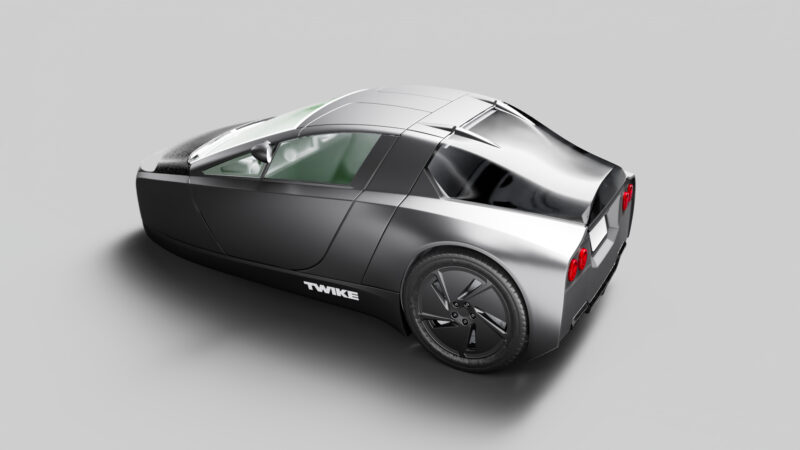
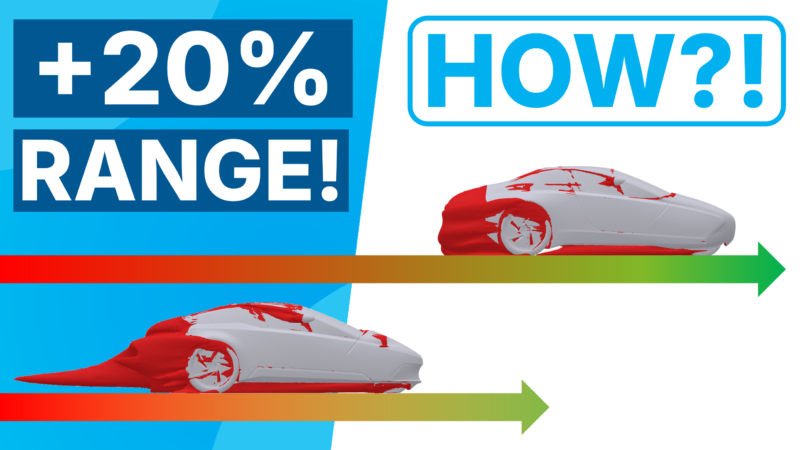
At the same time, the material, surfaces and layer structure of the first fiber composite parts such as the windscreen frame and hood are being coordinated. Although these components, which contribute to structural rigidity, will not yet be fitted to the next driver test vehicle (FET), they should follow as soon as possible. The design surfaces of the hood and also the windscreen are not to be touched until after tool approval at the latest and in fact already now. This makes it all the more important to ensure their aerodynamic quality in the form of a new, but this time final, computer simulation in AirShaper‘s virtual wind tunnel.
In this flow simulation, however, the surfaces of individual components are not considered in isolation and only on their own, as they are influenced by all adjacent components during their later use. In particular, the upstream components such as the lamp mask and front cladding will have a strong effect on the airflow to the hood and windshield behind them. However, rear add-on parts, rotating wheels or the wheel arch linings as well as their final air tear-off edge can also influence the air flow of the front parts.
Ultimately, the shape of the rear of the vehicle has the most serious influence on the driving resistance – this is where the battle is won. However, the front of the vehicle determines whether the airflow is distributed over the surface as undisturbed as possible – so the battle can already be lost here. The strategic answer to the current task is therefore to examine the entire vehicle body in a multi-stage flow analysis.
Since upstream surfaces have a greater influence on downstream surfaces, we began to make changes to the front of the vehicle in iterative loops until we reached a sensible optimum. The limits that should not be violated are already fixed components, e.g. headlights and front axle as well as their working spaces (light cone, movement envelopes). However, the first delicate tests revealed the need for more serious measures. For this reason, the front and rear of the vehicle are currently being massively re-sanded with the aim of maximizing the cd value without damaging the windscreen frame and the hood. After the new surface geometry of the main body has been fixed, the cladding components of the functional bodies (wheel arch, wiper arm, rear-view mirror, etc.), which have also not been changed in their position, and the interfaces (e.g. transition to sealing profiles) are optimized in separate iterations.
While striving for optimization, the already defined shape of the vehicle design should not be changed as much as possible. The primary aim is to avoid making any aerodynamic errors when defining the final surface. At the same time, we are taking the opportunity to achieve the optimum. We are very excited ourselves!
*updated on 05.08.2024