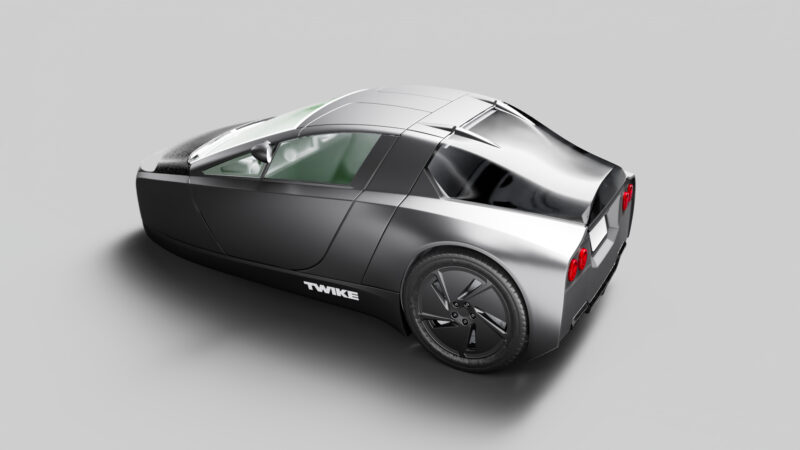
How big is a solar system that generates enough energy for 15,000 km of annual mileage with the TWIKE 5? This is the question asked by prospective TWIKE customers who want to generate their mobility not only in a sporty and active way, but also with clean electricity.
The short answer is: just 6 square meters.
A little longer: Due to the TWIKE 5’s relatively low consumption of around 8 / 7 kWh/100 km, an annual range of 15,000 km only requires energy of around 1,200 / 1,050 kWh. This can already be generated in the same period with a photovoltaic system of around 6 m² (1 kWp) with a good and shadow-free orientation.
Doesn’t it make sense to integrate a corresponding photovoltaic surface into the vehicle skin?
The short answer here is not sufficient. It would be yes and no.
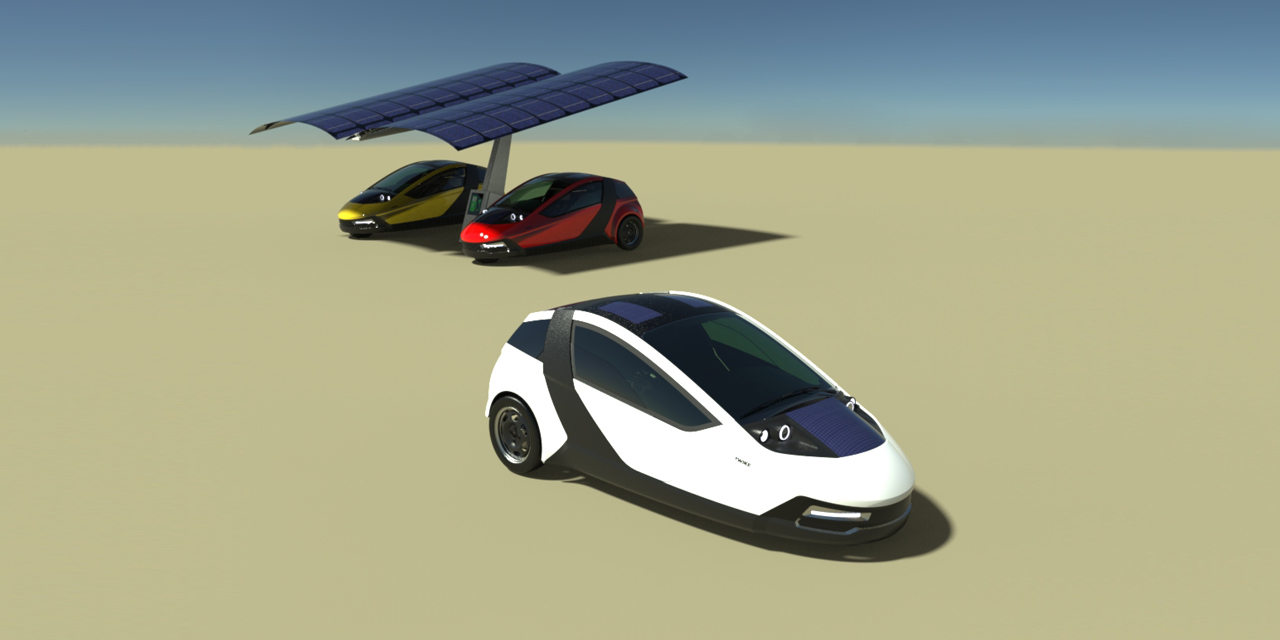
Yes, because a certain surface area of the vehicle is available on average during the day. And especially when the daily mileage is low, this surface can help to reduce the amount of energy drawn from a power socket. During this period, however, the vehicle should be exposed to the sun with as little shade as possible. Many years of experience have shown that a shaded parking space is the better choice on such sunny days in order to keep the interior cool and also to protect the battery from unnecessary heat input. Otherwise, the cooling capacity that has to be applied afterwards quickly destroys the energy yield. If there is no cool shady spot, the integrated solar panel can help to cool the interior or even charge the battery in cool weather. However, as the integration of the solar surface currently only reduces but does not avoid external energy consumption, even in the best case scenario (sunny day, unshaded parking space, cool weather), it is advisable to focus initially on the external energy source (photovoltaics, wind power, hydropower). The use of solar carports, which can be optimally aligned with the sun and provide shade for the parked vehicle, seems ideal to us. They help to separate clean rainwater from street water and feed the solar yield into the grid when not in use by the vehicle parked underneath.The short answer here is not sufficient. It would be yes and no.
Due to the elimination of solar panels on the vehicle, the TWIKE 5 can be designed to be cheaper but also lighter, thus contributing to reduced energy consumption. Sacrificial parts (replacement parts in the event of accidents) can be designed more cheaply without solar panels and thus help to keep insurance premiums low. However, these are only current framework conditions. In the future, the pros and cons of solar panels on the vehicle will still have to be weighed up. We are therefore already planning cut-outs for retrofitting photovoltaics in the vehicle surface ;-)