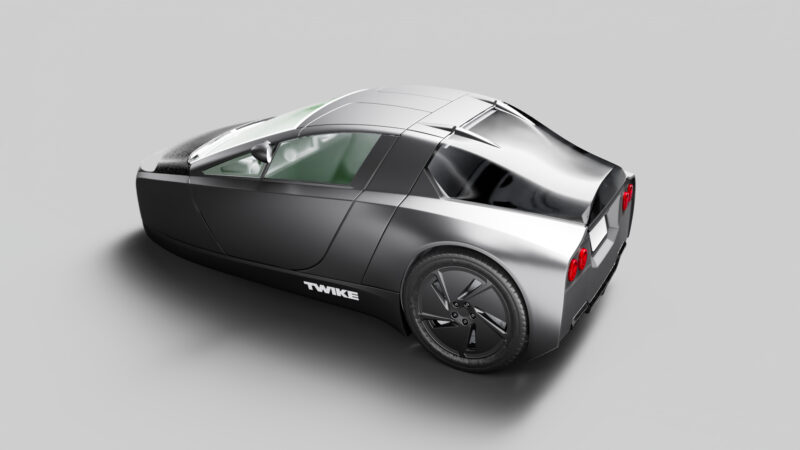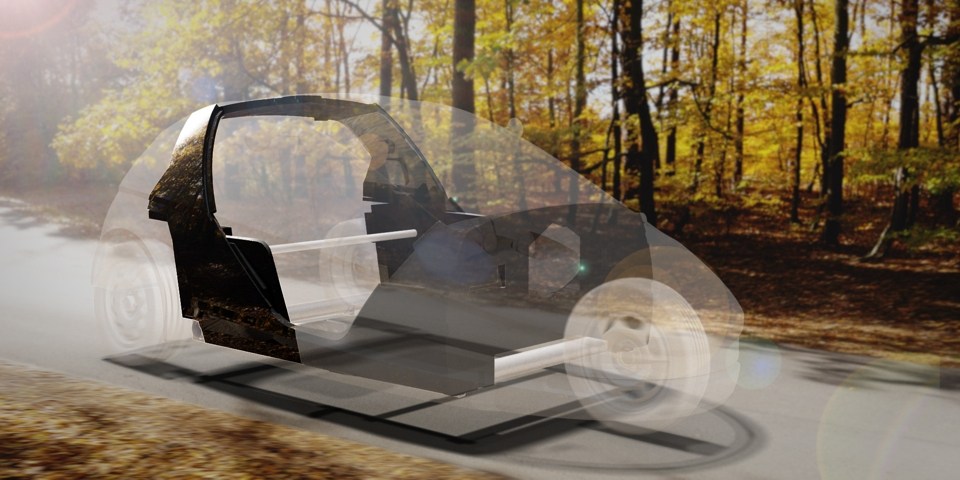
One of the complex but equally ingenious components of the new TWIKE 5 will be its roll bar. In addition to its eponymous function of rollover protection in the event of an involuntary rollover, for example, other safety functions will also be integrated into it in order to achieve the desired degree of lightweight construction. For example, it absorbs the restraining forces of the upper deflection of the three-point seat belt, but also effectively absorbs crash energy in the event of a foreign object hitting the side wall.
The roll bar, which is made of high-strength fibre composite, is also an extremely weight-optimized structural component that connects the base frame and the rear chassis and thus optimally takes into account their force influences. Furthermore, due to the low manufacturing tolerances of its production process, reliable sealing levels can be realized with repeat accuracy, which will help to reduce assembly times and, above all, will be reflected in a perfect finish of the surfaces in relation to each other.
The special requirements and the desired geometry require the bracket to be manufactured using specially developed tools. At first glance, this seems expensive, as we wanted to avoid special tooling costs in the small series, but in view of the high degree of integration of the functions (safety, structural element, sealing levels, finished and matching surfaces) and the possible degree of lightweight construction, the initial costs are already put into perspective with a 500 series and make the solution economical. Last but not least, the roll bar itself is a visual design object that optimally communicates the basic character of the TWIKE 5 (safe, powerful, efficient).
If you would like to gain a deeper insight into the development process at this stage, then visit us and take a test ride on the TWIKE 4.
We are looking forward!