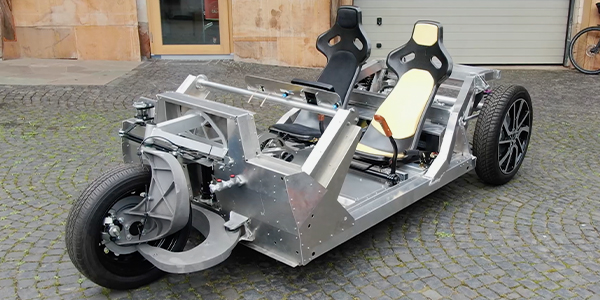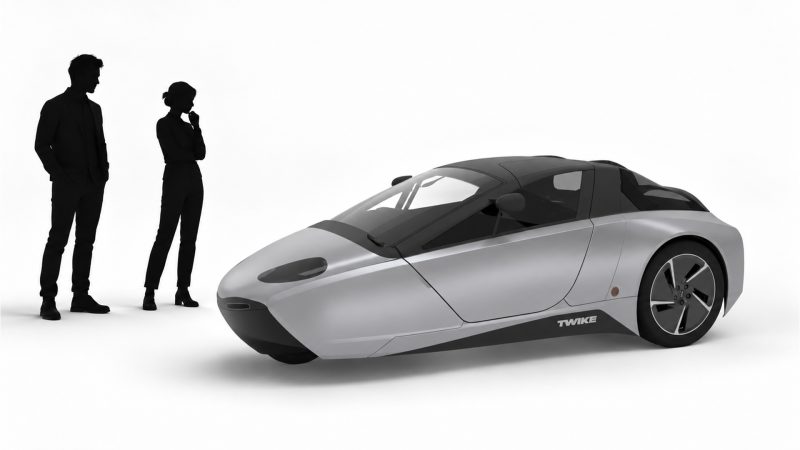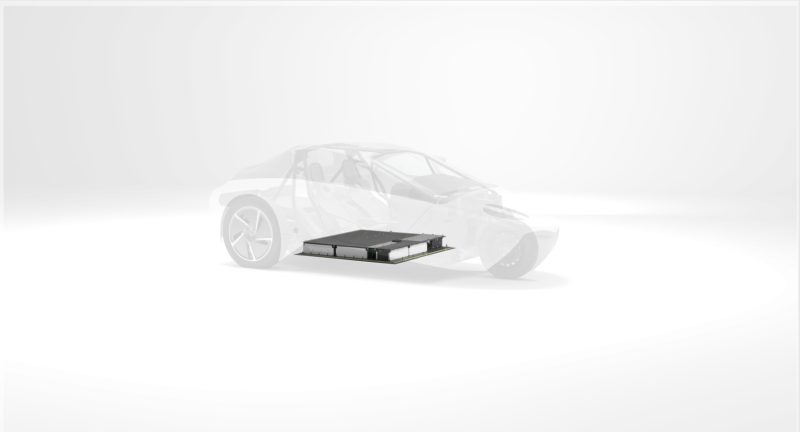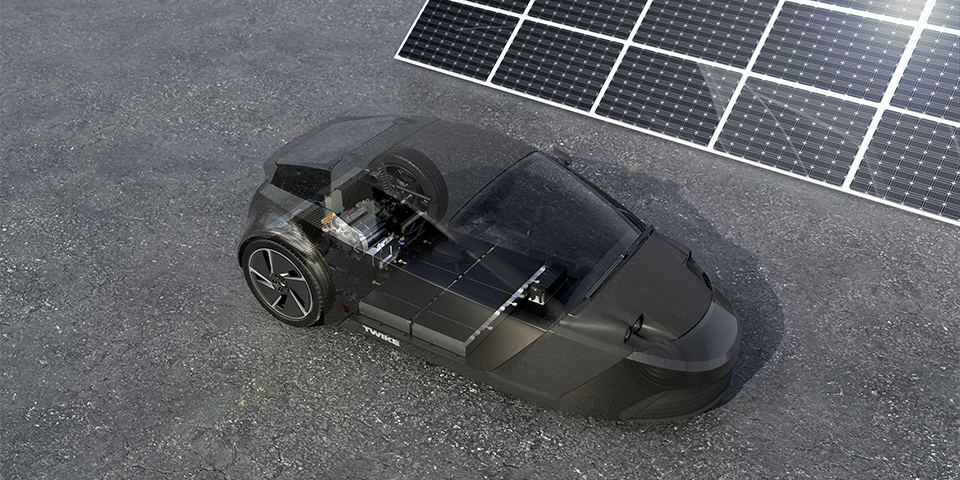
Customers keep asking us why we are sticking to the three-wheeled model approach. Why not four wheels? Why one wheel at the front and two at the rear instead of the other way around? Well, there are several good reasons for this tricycle model. On the one hand, we were able to build up extensive experience with the “Ur-TWIKE”, and on the other hand, the approval procedure allows an economical start even with the small series. The main reason, however, lies in the technical advantages.
Bottom-up: From bicycle to TWIKE
The first TWIKE was built by tech-savvy students at ETH Zurich with a passion for environmental protection and a love of cycling, and was unveiled at the 1986 World Expo in Vancouver. Their vision was a lightweight, covered bicycle for two people plus luggage, designed for use in urban areas. They designed an aerodynamic recumbent bicycle with side-by-side seats and opted for the delta configuration that is still in use today (one wheel at the front, two at the rear). This provides the necessary stability while allowing a higher payload on the rear axle without critically shifting the center of gravity.
The students at ETH Zurich wanted to turn a bicycle into an electric vehicle with a sustainable drive system, space for several people, and compliance with the necessary safety standards for road traffic. Their starting point was the bicycle, not the car, so the idea for the TWIKE 3 was a bottom-up rather than a top-down process. Why are we still sticking with the delta configuration today?
Advantages of the tricycle: simplified approval, lightweight construction and agility
In order to build a powerful electric vehicle with a long range, weight reduction is of paramount importance. The heavier a vehicle is, the more energy it needs to move. However, as the TWIKE only has three wheels, the otherwise higher requirements for torsional rigidity around the vehicle’s longitudinal axis are reduced. This alone offers a certain potential for lightweight construction, and further weight has been reduced by eliminating additional components.
With its two wheels on the rear axle, a delta tricycle maintains the handling safety expected of a car, even on critical road surfaces. At the same time, the load of luggage has little effect on the driving stability of a delta tricycle. Last but not least, a low center of gravity and the development of a roll-active rear axle have made it possible to achieve the cornering agility of a modern sports car.
The reason we are sticking with the three-wheeled design for the TWIKE 5 is linked to the vehicle’s registration. The registration process for three-wheelers is significantly less costly than for four-wheeled cars. The difference here is between a single-digit million figure (for a three-wheeler, EU Class L5e, US Motorcycle) and a mid-three-digit million figure (for a four-wheeled car, Vehicle Class M). The lower initial costs make it economically viable even in small-scale production runs.
In addition, there is no power limit for the L5e vehicle class (in contrast to the four-wheeled L7e class), which enables us to launch the new TWIKE 5 with a maximum speed of 190 km/h on the market. In the USA, tricycles are also classified as “motorcycles” if they meet certain motorcycle criteria (e.g. handlebars instead of a steering wheel). The lower registration requirements associated with this are another good reason for us to stick with the tricycle in view of a possible expansion into the US market.
In our next update, we will go into more detail about the technology installed in the new TWIKE.