With the TWIKE 5, it’s not just our vehicle that’s changing—TWIKE itself is evolving as well.
For many years, our company was primarily focused on development: vehicle concept, design, software, testing, supplier development, and homologation. With every step toward series production, the focus is now increasingly shifting to a new phase: industrialization, production, and scaling.
This change affects more than just tooling, bill of materials, or assembly processes. It also addresses the question of how TWIKE should be organized in the future.
Small at the Core, Strong in Our Network
Our goal is not to become a traditional large automotive conglomerate.
We intend to continue operating with a comparatively small, agile core organization and to concentrate within it the expertise that is truly essential to TWIKE. At the same time, we want to collaborate strategically with specialized partners—in development, manufacturing, components, services, and, later on, in additional markets.
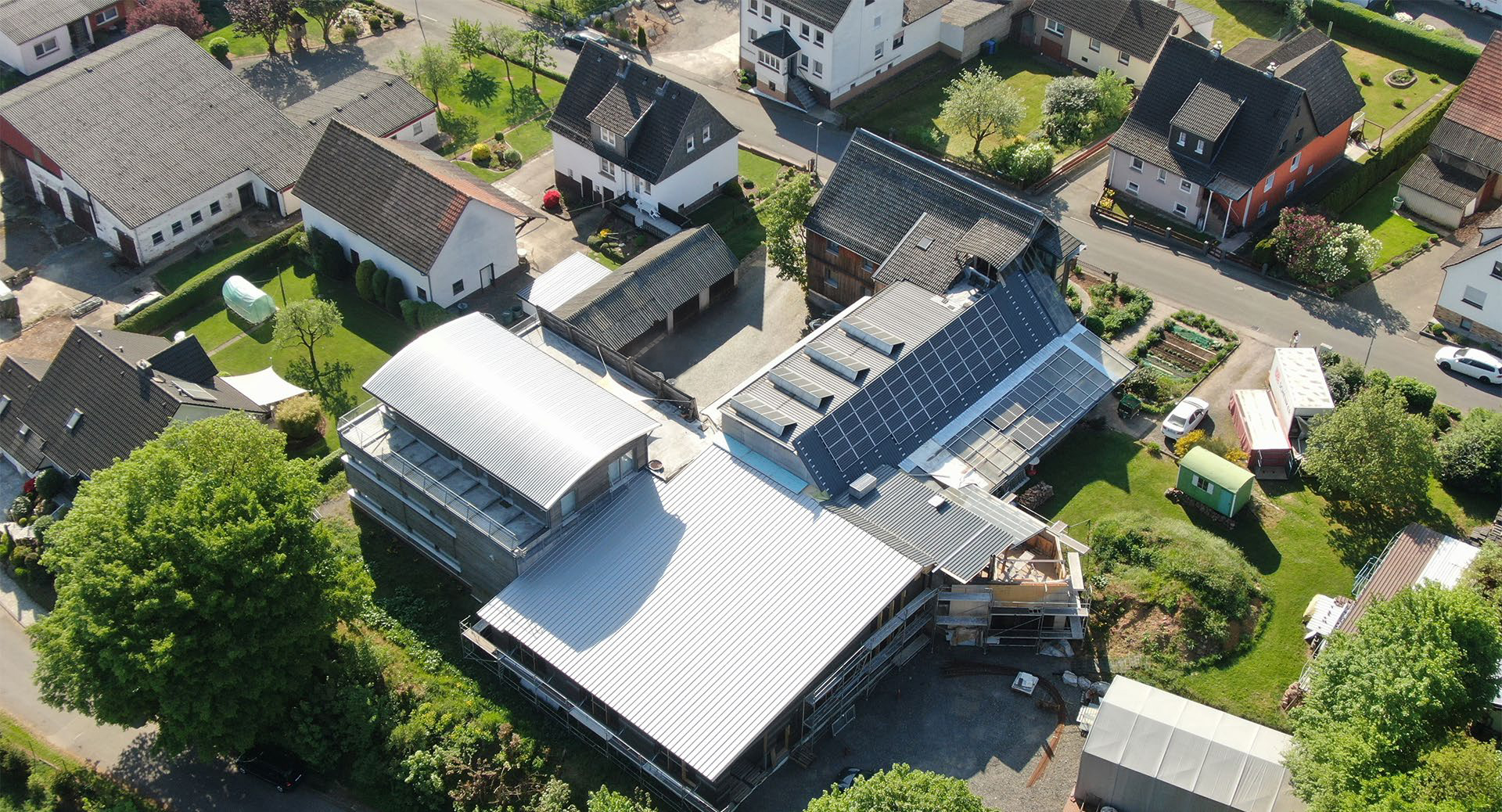
Rosenthal remains a key hub in this regard.
This is where central development and production processes will converge. At the same time, the organization will be structured so that it can grow in line with increasing production volumes without becoming unnecessarily cumbersome or slow.
From Project to Long-Term Corporate Structure
Our development does not end with the start of TWIKE 5 production—quite the contrary.
In parallel with vehicle development, we are increasingly focusing on TWIKE’s long-term corporate structure. This includes our intention to eventually establish TWIKE N.V. as an overarching holding and investment platform.
This structure is currently still in the planning stages.
In the long term, it is intended to help consolidate operating companies, future activities, and potential additional investments under one umbrella and to create a sound corporate legal foundation for TWIKE’s further development.
At this time, no specific investment offers or terms are explicitly associated with this plan.
The First 500 Vehicles as a Foundation
Our immediate goal remains clear: to successfully bring the TWIKE 5 into series production and get the first vehicles on the road.
Our focus is not on producing as many units as possible as quickly as possible. The TWIKE 5 is initially intended to be produced as a high-quality small-batch series—with a controlled ramp-up, close feedback from production and use, and a level of quality that matches the vehicle’s unique character.
The first 500 vehicles form an important foundation for this. With them, we aim to firmly establish production, service, the supply chain, and our organization, while simultaneously learning which structures can be meaningfully developed and scaled.
For us, long-term growth therefore does not automatically mean traditional mass production. Rather, it means positioning TWIKE in such a way that a special small-batch production run can evolve into a sustainably viable company—with additional markets, new partnerships, expanded production capacity, and future generations of TWIKE.
That is precisely why we are already putting the right structures in place today.
So we’re not just developing the next TWIKE. We’re laying the groundwork for TWIKE to survive and grow in the long term—without losing its character.